
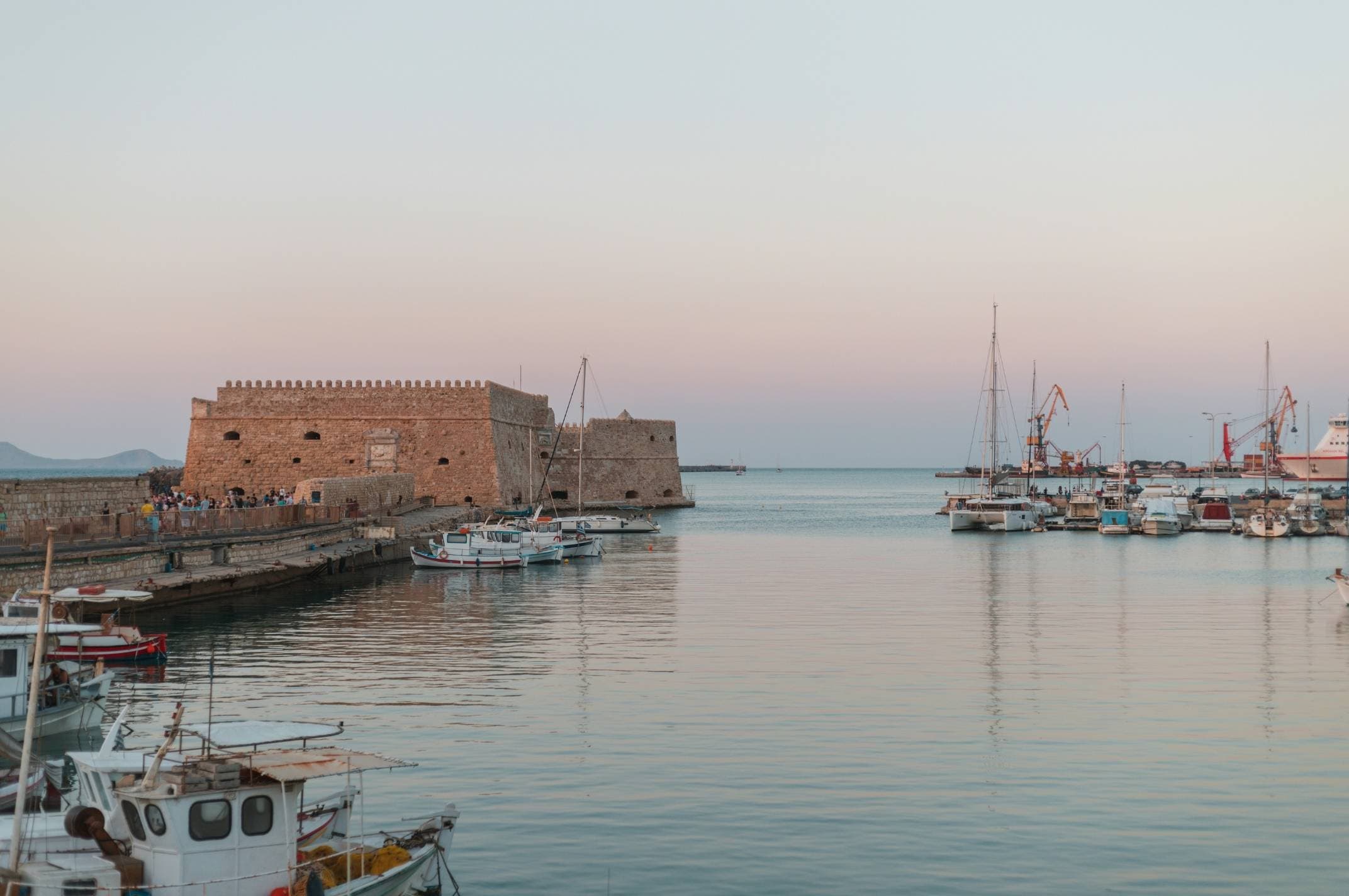
Food tours · Heraklion
A food city sitting inside a farming region
You can spend half a day tasting your way across the old town on foot, or a whole day out among the vineyards, olive mills and mountain sheepfolds that supply it. Both are sold as food tours here, and they are not the same day. Here is what each format actually is, what this region produces, and what to ask before you book.
Five PDO wine zonesFour PDO olive-oil zonesOld town: half a day on footThe stills: October to DecemberOpen all year
Where
In the city, or in the villages
Wine zones
Five, all in Heraklion
Olive oil
Four PDO zones
The spirit
Tsikoudia, a Cretan PGI
City core
Walkable, no booking
Strongest season
Autumn, for the stills
Ask first
Where the day actually goes
What this actually is
- Two quite different scales under one label: a tasting walk through the old town on foot, or a driving day out into the farmland that supplies it.
- A city where the guided tasting walk is a well-established format: commonly about half a day, small groups, eight to twelve small tastings, with the market street and the Venetian monuments worked in along the way.
- A region with real protected designations behind it. Five PDO wine zones and four PDO olive-oil zones sit inside the Heraklion regional unit.
- A place where the most local food is often the cheapest. The home-cooking lunch rooms and the rakadika are where residents actually eat.
- Genuinely seasonal. Autumn brings the grape harvest and the raki stills; the turn of the year brings the olive mills and the new oil.
- Approachable without a guide, provided you are willing to read a Greek menu, or to point at what the kitchen cooked today.
What it is not
- Not a walk through a busy working food market. The historic market street still sells produce, dairy, cheese, herbs and fish, but residents' daily shopping has largely moved to the open-air markets in the suburbs, and souvenir shops now take up much of the street.
- Not one standard day. The same category covers a morning of small tastings inside the old walls and a full day of driving between producers, so the distance travelled is the first thing to establish.
- Not the same thing as a cooking class, although plenty of days here combine tasting with cooking, and a class is a legitimate way to approach the subject on its own.
- Not a fixed number of tasting stops. The products differ so much from one another that any count offered for the whole category would be made up.
- Not a health programme. Crete's part in the Mediterranean diet story is documented history, but a day of tasting is a day of tasting.
Where they go
One label, four different distances
Heraklion is the agricultural centre of Crete as well as its largest city. The regional unit around it holds five protected wine zones and four protected olive-oil zones, and behind those sit the shepherds' villages of the Psiloritis massif. So the subject stretches from a single street in the old town to mountain pasture 45 km away, and everything in that range gets filed under the same two words.
That makes distance the first thing to establish, because it decides the shape of the day more than the food does. A tasting walk stays inside the old walls and moves at walking pace. A day round the wine villages of Archanes, Peza or Dafnes runs roughly 12 to 20 km south. An olive mill can be nearer than that. A day with shepherds on Psiloritis is around 45 km west, and the road crosses into a different regional unit altogether.
None of these is the serious version of the others. A half-day of small tastings between the market and the Venetian monuments teaches you the city; a day among the producers teaches you the land. Most people who care about the subject end up doing one of each, in whichever order the weather and the harvest allow.
This loads Google Maps, switches on functional cookies and lets Google set its own cookies. You can change this in the cookie settings at any time.
Heraklion centre
Archanes
Peza
Dafnes
Zoniana, on Psiloritis
Markers 2 and 3 sit close together, so they nearly touch at this scale: read the numbered list rather than the pins to tell the wine villages apart. This is not a route. Pick one direction for the day.
In the old town
On foot, about half a day
The market street, the bougatsa houses on Lion Square, the rakadika of the Lakkos quarter, the old ouzeri near the port and the organic producers' market. Available guided, as a tasting walk with the monuments included, or done yourself at no fixed pace.
The wine villages
About 12 to 20 km south
Archanes, Peza and Dafnes. Vineyards from roughly 300 up to 800 metres, planted largely with varieties grown almost nowhere else, and cellars that receive visitors. Usually paired with a village lunch.
Olive country
Around and south of the city
Working groves and mills. The regional unit holds four protected oil zones: Messara, Viannos, Peza and Archanes. A mill is a different thing in December, when it is running, than in July.
Up on Psiloritis
About 45 km west
Shepherds' country: cheese made the same morning, and lamb set upright at an open fire. Worth knowing that this road leaves the Heraklion regional unit and enters the Rethymno one.
Choose
Six honest formats
These are not tiers of quality. They are different days, at different distances and paces, and one of them needs nobody's permission at all.
A guided tasting walk
For a first proper day in the city
The standard city format: commonly about half a day on foot, small groups, and eight to twelve small tastings worked in around the market street and the Venetian monuments. Bougatsa, cheeses, olives, dakos, kalitsounia, oil, raki and wine are the usual run.
The same walk, yourself
For anyone with a free morning and no schedule
Bougatsa on the square, a loop of the market street, cheese and herbs from a stall, then a plate of small dishes with a raki in the afternoon. You lose the interpretation and the introductions; you keep the whole day and pay only for what you eat.
A wine and spirits day
For drinkers who want the varieties explained
One or two cellars in the villages south of the city, sometimes with a distillery added, and lunch somewhere along the way. The indigenous varieties are the reason to do this here rather than anywhere else. Somebody has to be the driver.
An olive oil day
For anyone who has only ever bought it in a bottle
A working grove and a mill, with a tasting that teaches you what the words on a label mean. Worth timing deliberately: from late autumn into winter the mill is running, and the rest of the year it is a quiet room.
Cook it, do not just taste it
For people who want to repeat it at home
A hands-on day, usually built around a garden or a farm kitchen, where the tasting is the introduction and the cooking is the point. Slower than a walk, and the format most likely to send you home with something you can actually make.
Go up the mountain
For the ones who want the source, not the shop
A long day west into the massif: a working sheep farm, cheese at the stage where it is still warm, and meat cooked slowly at a fire. Mostly road, and worth it for that reason.
The city
The city on foot
Six places, roughly ten minutes apart, whether you are walking it with a guide or on your own
Start with an expectation to lower. The historic market on 1866 Street is the street every guide names, and it is no longer the food market it was: residents' daily shopping has largely moved out to the open-air markets in the suburbs, and a dense run of souvenir and gift shops has moved in. What survives is still worth the walk. Fruit and vegetables, good dairy, cheese, cured meat, herbs and spices are all sold there, and a cross street holds the fish market, with small fish tavernas attached to it.
The rest of the city's food culture is not on that street at all. It is in three or four separate habits, each in its own place: bougatsa and a coffee on Lion Square in the morning, a plate of small dishes with a raki in the late afternoon, a fixed-menu lunch cooked once that morning and served until it runs out, and a producers' market that is genuinely for people who cook.
None of this is expensive, and very little of it is in English. That is the point rather than the problem. A guided tasting walk covers most of the same ground with the tastings arranged and the history attached, which is worth paying for on a first visit; the list below works either way, as a route to follow or as a way to check what a walk is about to show you.
How eating works here
The drink comes first
In a rakadiko you order raki and small plates follow it, sometimes unasked and sometimes without appearing on the bill. The drink is the unit, not the dish. Order in rounds and stop when you have had enough.
Lunch is cooked once
A mageirio cooks a set of dishes in the morning and serves them until they are gone. The choice is widest early and thin by late afternoon, which is why the advice locals give is to arrive before the crowd rather than after it.
A Greek-only menu is a good sign
Several of the most local rooms print nothing in English, and their reviews live on Greek sites rather than international ones. Both are reliable signals that you have found a residents' place.
The last thing is often free
A small dessert, a piece of honey cake or a final raki arrives at the end in many places and is a courtesy rather than an error on the bill. Accepting it is the polite move.
The plate follows the year
Wild greens in the cool months, snails after rain, tomatoes worth eating raw in summer, new oil at the turn of the year. A menu that reads the same in January and July is telling you something.
Where to actually go
1866 Street, the old market
The historic market street, running between two squares. Produce, dairy, cheese, cured meat, herbs and spices survive alongside a long run of souvenir shops. A cross street holds the fish market, with small fish tavernas around it.
Lion Square, for bougatsa
Two bougatsa houses have faced each other across this square for about a century, one founded in 1922 by an Armenian refugee, the other by a family from Smyrna. Cheese bougatsa under sugar and cinnamon, with a Greek coffee, is a resident morning habit rather than a visitor ritual, and the recent reviews of both are written in Greek.
Kornarou Square
The southern anchor of the market street, with the Venetian fountain on it. Useful as a landmark rather than a destination: walk north from here and you are in the market within a few steps.
The Lakkos quarter
The city's old rebetiko quarter, and before that its red-light district, brought back over the last decade into a run of rakadika and small tavernas around one square. Greek media cover it as neighbourhood life rather than as an attraction, which is the best thing anyone can say about a nightlife street.
Agiou Dimitriou Square, near the port
A quiet cluster of alleys where several of the city's old ouzeri have survived, one of them in the same family since 1978. This is the seafood-and-ouzo end of the tradition rather than the raki-and-meze end.
Georgiadis Park, for the organic market
The organic producers' market, held in the park through the year on Monday, Wednesday and Friday in the middle of the day. Local fruit and vegetables, honey, olives and hand-harvested sea salt. Confirm the hours locally, because market times move.
On the map
This loads Google Maps, switches on functional cookies and lets Google set its own cookies. You can change this in the cookie settings at any time.
Six places inside about 750 metres. The numbers match the list on the left. Turn the location control on if you want to see which of them you are already standing next to.
One more market
One more market is worth knowing and is deliberately not pinned above. The large neighbourhood open-air market at Pateles sells Cretan produce, dairy, olives, herbs and honey alongside clothes and street food, and it runs from early morning until the early afternoon. We could not establish which day of the week it is held, so ask locally rather than trusting a fixed day from any source, including this one.
The produce
What this regional unit actually makes
The reason the day trips exist, and the words you will see on a label
Protected designations are not marketing. A PDO, a protected designation of origin, ties a product to a defined area and a defined method; a PGI, a protected geographical indication, is the looser cousin of it. Heraklion carries an unusual number of both, and they are the reason a guided food day here has somewhere to drive to.
Read them as a map rather than as a ranking. Nothing below is better than anything else on the list; each name simply tells you where a thing comes from and, often, which grape or which animal it came from.
Wine: five PDO zones
All five sit inside the Heraklion regional unit
- Archanes, Dafnes, Peza, Chandakas and Malvasia Chandakas.
- Peza was established for red in 1971 and for white in 1982, with vineyards reaching about 800 metres. Whites are built on Vilana; reds on Kotsifali and Mandilaria.
- Archanes, also from 1971, sits between 300 and 450 metres and makes dry reds from a Kotsifali and Mandilaria co-fermentation.
- Dafnes is built on Liatiko, made both dry and sweet.
- The wider Heraklion PGI also admits Vidiano, Dafni, Thrapsathiri and Plyto, all of them local whites you will rarely meet off the island.
Olive oil: four PDO zones
Plus a PGI covering Cretan extra virgin more broadly
- Messara, Viannos, Peza and Archanes.
- Mainly the Koroneiki variety, the small olive that dominates Greek oil; Tsounati is also grown on the island.
- Cretan extra virgin olive oil also carries a protected geographical indication in its own right.
- A mill is a working factory from late autumn into winter and a quiet showroom in summer. Ask which one you are visiting.
Cheese and dairy
Sheep and goat, almost never cow
- Graviera Kritis holds a PDO: sheep's milk, with up to a fifth goat's milk, matured for at least three months.
- Mizithra is the fresh, mild one that fills bougatsa and kalitsounia.
- Xynomizithra is its sour version, and athotyros is mizithra dried until it is hard and salty enough to grate.
- Staka is the clotted cream skimmed off sheep or goat milk, and it is closer to a cooking fat than to a cheese.
Tsikoudia, and what it is not
The island's spirit, with a protected name
- Tsikoudia is distilled from strafyla, the grape pomace left over after winemaking. On Crete the words tsikoudia and raki mean the same drink.
- Tsikoudia Kritis holds an EU protected geographical indication, so only tsikoudia made on Crete may use the name.
- It usually lands somewhere between 35 and 60 percent alcohol, and it is poured generously. It tastes far lighter than it is.
- It is not ouzo, which is flavoured with anise, and it is not the mainland's tsipouro, although the method is a cousin of it.
Bread that keeps
Barley and chickpeas, not baker's yeast
- Paximadi is barley bread baked twice until it is hard, the island's everyday bread and the base of dakos.
- Eftazymo is leavened by a starter of coarsely pounded chickpeas fermented in water with laurel, rather than by baker's yeast. Its name comes from a word meaning self-leavening.
- It is associated with the village of Kastamonitsa in this regional unit, and it is difficult enough to make that it is still a village skill rather than a factory product.
Herbs and the mountain
The part of the shopping list that weighs nothing
- Malotira, Sideritis syriaca, is the Cretan mountain tea, gathered high and drunk through the winter.
- Dittany, marjoram, sage, thyme and oregano are all sold loose in the market street, and are the lightest thing you can carry home.
- Thyme honey is the local default, and it tastes of the hillside rather than of flowers.
One name on the wine list is worth decoding before you see it. Chandakas was the city's own name under Venice, so a bottle labelled Chandakas or Malvasia Chandakas is named after Heraklion itself, several centuries and several rulers ago.
The plate
The plate, name by name
What the words mean when the menu does not translate them
Dakos
ΝτάκοςBarley rusk softened just enough, then grated tomato, crumbled mizithra or feta, olive oil and dried oregano. The island's single most reliable dish.
Kalitsounia
ΚαλιτσούνιαSmall pies, filled with cheese or with wild greens, sweet in some versions and savoury in others. Fennel is a filling you meet around Heraklion.
Staka
ΣτάκαClotted sheep or goat cream, usually served with eggs or over potatoes. Rich in a way that surprises people who expect Cretan food to be austere.
Apaki
ΑπάκιPork marinated in vinegar, then smoked over aromatic herbs such as sage, thyme and bay. Served in thin slices, cold.
Chochlioi boubouristi
Χοχλιοί μπουμπουριστοίSnails cooked face down in olive oil with rosemary and a splash of vinegar. The name describes the position they go into the pan in, and they arrive after rain.
Gamopilafo
ΓαμοπίλαφοWedding rice, cooked in meat broth until it is creamy rather than loose. Traditionally the centre of a village celebration, and served outside weddings too.
Antikristo
ΑντικριστόLamb set upright in a ring facing an open fire and roasted slowly by the radiated heat rather than over the flame. A mountain method, and a long one.
Skioufichta
ΣκιουφιχτάShort pasta twisted by hand so that each piece holds a groove, which is the point: the sauce and the grated cheese stay on it.
Xinochondros
ΞινόχονδροςCracked wheat soured with milk and dried, then cooked into soups and pilafs through the winter. One of the oldest things still eaten here.
Bougatsa
ΜπουγάτσαPhyllo pastry filled, in the Cretan version, with fresh mizithra rather than the semolina custard of northern Greece, then cut up under sugar and cinnamon. Breakfast, not dessert.
Lychnarakia
ΛυχναράκιαLittle open pastries filled with mizithra, made at Easter. The name means small lamps, which is what they look like.
Soumada
ΣουμάδαA non-alcoholic almond syrup, diluted with cold water, traditionally served at weddings, engagements and baptisms. The Cretan version is scented with rose or flower water.
Recipes shift from village to village and every cook will tell you the neighbouring version is wrong. Treat all of the above as the shape of a dish rather than as its only correct form.
The year
The year, honestly
Four bands, not twelve invented months
Two calendars govern food here, and neither of them is the weather forecast: the harvest and the fasting year. A winery in February is a cellar visit; the same winery in September is a working crush. An olive mill is a quiet showroom in July and a factory in December. If a producer visit matters to you, book around the harvest rather than around the temperature.
October and November
Right now, in OctoberThe stills. After the grape harvest the pomace is distilled in copper kazania, village by village, and the distillation turns into a gathering: people bring cooked food and meat for the fire and wait their turn. The strongest food weeks of the year here, and the hardest to buy as a product.
December and January
The mills run and the new oil appears, green and peppery and unlike anything in a supermarket. Citrus is in, wild greens are up, and the distilling season tails off through December.
February to May
Wild greens at their best, snails after rain, and the fasting weeks before Easter, which push kitchens towards the plant-heavy cooking they were already built around. Easter and carnival each bring their own baking.
June to September
Tomatoes worth eating raw, so dakos is at its peak, and the heat governs the day exactly as it does for sightseeing. Mills and stills are quiet until the harvest arrives at the end of it.
All year round
Almost everything in the city runs regardless of the bands above. The bougatsa houses, the rakadika, the home-cooking lunch rooms and the organic market are all year-round, so a visit that falls outside a harvest loses a producer visit, not a food city.
What to ask
What to ask before you book
These products differ so much from each other that the same four questions make them comparable.
Where the day actually goes
- Does the day stay inside the city, or drive out of it?
- Which villages or which zone, by name?
- How much of the time is spent in the vehicle?
- Does the route cross into another regional unit?
What you actually eat and drink
- How many stops involve food, and is any of them a full sitting meal?
- Is wine or raki poured, and roughly how much?
- Is the food part of what you pay, or bought as you go?
- Whose kitchen cooks: a taverna, the producer, or the guide?
Diets, allergens and children
- Can the day handle vegetarian, vegan or gluten-free eating, given that barley rusk and cheese are central to it?
- Are nuts present, given the almond drinks and sweets?
- Is there anything for somebody who does not drink alcohol at all?
- Are children welcome, and is there food a child will actually eat?
Timing and the harvest
- Will the mill or the still actually be running on my date, or is it a showroom visit?
- If the harvest shifts by a fortnight, what changes in the day?
- What happens if a producer closes at short notice?
- Is a pickup included, and from where exactly?
Before you book
The market street is not the food market it was. Residents' daily shopping has largely moved to the open-air markets in the suburbs. Go for the herbs, the cheese, the dairy and the fish market, and expect a great many souvenir shops in between.
Raki tastes far lighter than its strength and it is poured generously. If a day combines a distillery with a winery, decide who is driving before the first pour, not after it.
Menus in the most local places are often only in Greek, and the kitchen may have cooked a different set of dishes today than yesterday. Asking what there is, rather than reading, is normal here.
Prices, tasting fees, opening days and market hours all change, and none of them appears anywhere on this page. Confirm the ones that matter with the producer or the operator for your own date.
The Mediterranean diet is inscribed on the UNESCO list of intangible cultural heritage, as a practice shared by seven countries. There is no separate listing for a Cretan diet, and no tasting day is a health treatment.
Psiloritis is a UNESCO Global Geopark, which is not the same thing as a World Heritage site. Tour descriptions mix the two up often enough to be worth knowing about.
FAQ
Frequently asked questions
Is there a food market in Heraklion worth visiting?
Yes, with a lowered expectation. The historic market street still sells produce, dairy, cheese, cured meat, herbs and spices, and the fish market on a cross street is real, but souvenir shops now occupy much of it and residents shop mostly at the open-air markets in the suburbs. For a market that is unambiguously about food, the organic producers' market in Georgiadis Park runs on Monday, Wednesday and Friday through the year.
What is a rakadiko, and how do I order in one?
It is a room built around the spirit rather than around the menu. You order raki, and small plates follow it, in some places unasked and in some places without going on the bill at all. Order in rounds, share everything, and stop when you have had enough rather than when a course ends. It is the cheapest good eating in the city and the most sociable.
Do food tours here stay in the city, or leave it?
Both are established formats. Guided tasting walks through the market street and the old town run in this city year round, commonly about half a day, and they are the usual first choice. Separately, full-day trips drive out to the wine villages south of the city, to an olive grove and mill, or west into the Psiloritis massif, because that is where the producers are. They are different days at different paces, so establish the distance travelled before reading the description.
What happens on a guided tasting walk, and how much walking is it?
The pattern is consistent across the city: a small group, roughly half a day, and eight to twelve small tastings spread over family bakeries, market stalls and small shops, with the Venetian and Ottoman monuments explained along the way. Expect bougatsa and coffee, cheeses, olives, oil, paximadi and dakos, kalitsounia, something sweet, and raki or wine near the end. The distance covered is short and flat, well under a couple of miles, because the historic core is compact. Come hungry rather than fed.
When is the best time of year for a food day?
October and November, if you can choose. The grape harvest is in and the raki stills are running, which is when the countryside is at its most alive. December and January are the next best, because the olive mills are working and the new oil is out. Summer is the weakest for producer visits, although the city itself and the tomatoes are at their best.
What is kazanema?
The distilling of tsikoudia, which happens after the grape harvest, roughly from October into the middle of December. The pomace left from winemaking goes into a copper still, and because the process takes hours it becomes a gathering: people bring cooked dishes and meat for the fire and wait for their share. It is a village and family event rather than a ticketed one, so it is much easier to be invited to than to book.
What is the difference between raki, tsikoudia and ouzo?
On Crete raki and tsikoudia are two names for the same drink, distilled from grape pomace and left unflavoured. Ouzo is a different thing, flavoured with anise, and it is what turns cloudy with water. Tsipouro on the mainland is made by a related method, but Tsikoudia Kritis holds a protected geographical indication of its own, so only the Cretan spirit may use that name.
Is Cretan food good for vegetarians and vegans?
Unusually good for vegetarians, and better than most Greek cooking for vegans, because the everyday repertoire is built on pulses, wild greens, bread and oil rather than on meat. The fasting weeks in the church calendar have kept a large body of dairy-free and egg-free dishes in daily use. The catch is that cheese finds its way into a great deal of it, including dakos and the pies, so it is worth saying so when you order.
Which local wines should I ask for by name?
Among whites, Vilana is the backbone of the Peza zone, and Vidiano, Dafni, Plyto and Thrapsathiri are all local varieties you will rarely meet away from the island. Among reds, Kotsifali and Mandilaria are usually blended together, and Liatiko carries the Dafnes zone in both dry and sweet form. Asking for a variety rather than a label is the fastest way to drink something that only exists here.
Is bougatsa a breakfast or a dessert?
Breakfast, in this city, and usually taken standing or sitting on the square with a Greek coffee. The Cretan version is filled with fresh mizithra rather than the semolina custard of northern Greece, then cut up and covered with sugar and cinnamon, so it reads as sweet without being a pudding.
Is the food in the villages different from the food in the city?
Less than you might expect in what is cooked, and more than you might expect in how. The same dishes appear in both, but a village kitchen is closer to the animal, the grove and the garden, so the cheese may be days old rather than weeks and the meat may be cooked by a method that needs a fire and several hours. That is most of the argument for taking a day out of town.
Can I visit a winery or a mill without a tour?
Many producers in the villages south of the city receive visitors directly, so a hire car and a phone call is a real alternative to a guided day. The trade-off is the obvious one: somebody in the car cannot taste. Contact the producer ahead rather than arriving unannounced, particularly outside the harvest months when a small estate may have nobody free.
The best meal in Heraklion is rarely the most expensive one, and it is almost never the one with the biggest sign.
Bookable days
Food and drink days from Heraklion
These are the food and drink days currently listed here, which is a smaller set than the formats above. Check the distance before the description, and if the format you want is not listed, the guide above still tells you what to look for elsewhere.
Trips are ordered by our recommendation. Ranking is never paid placement.
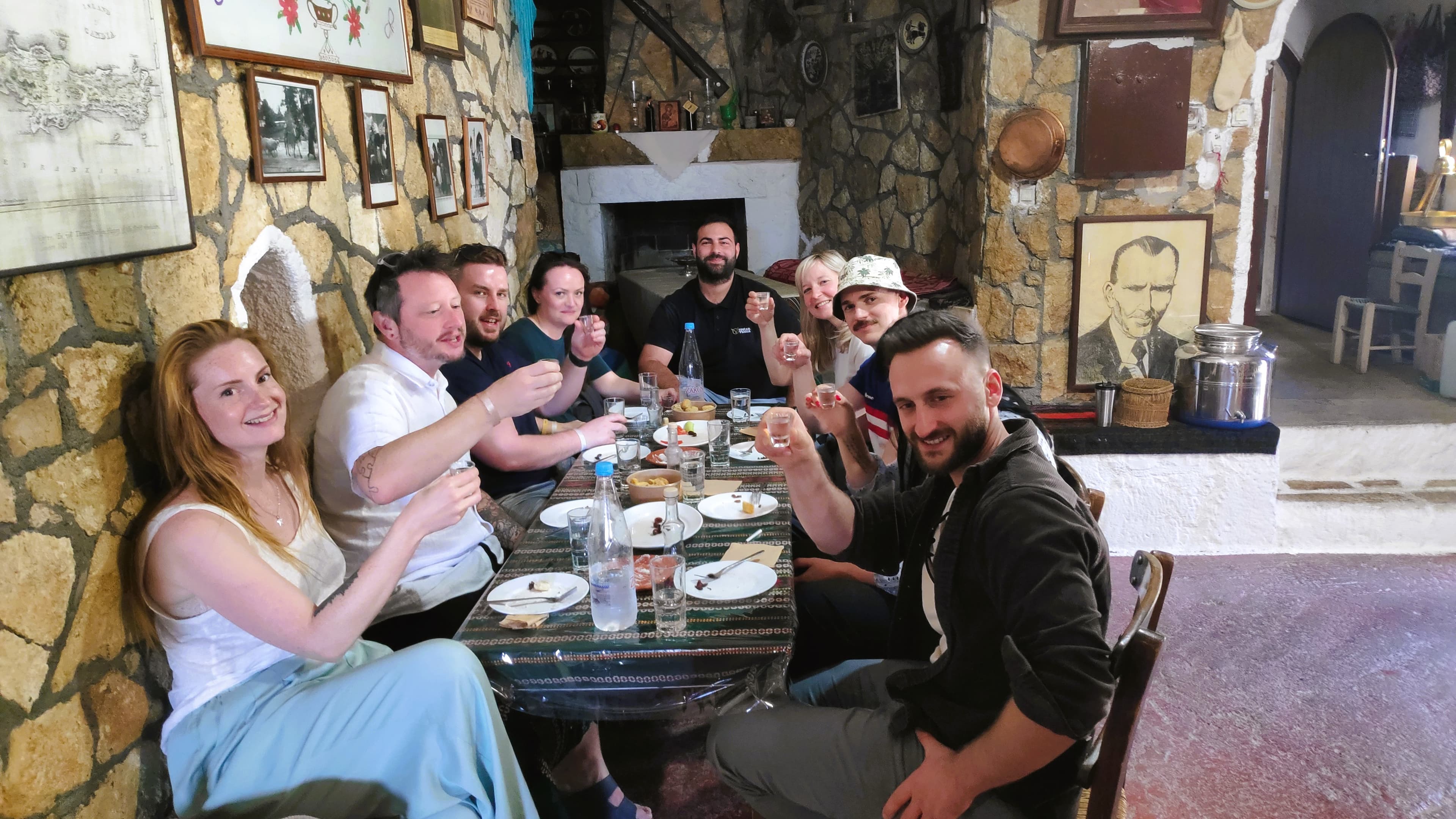
Heraklion, Greece
Cretan Wines & Spirits Full-Day Tour in Heraklion
A full-day guided tour combining olive oil tasting at a working mill, wine tasting at a family-owned organic winery, a raki distillery visit, a traditional lunch, and a hands-on pottery workshop in a Cretan village. Runs daily April through November with hotel pickup included.
Small group · max 8
5.0from 290+ reviews
Free cancellation up to 24h before
8h
From €120 / person
View Activity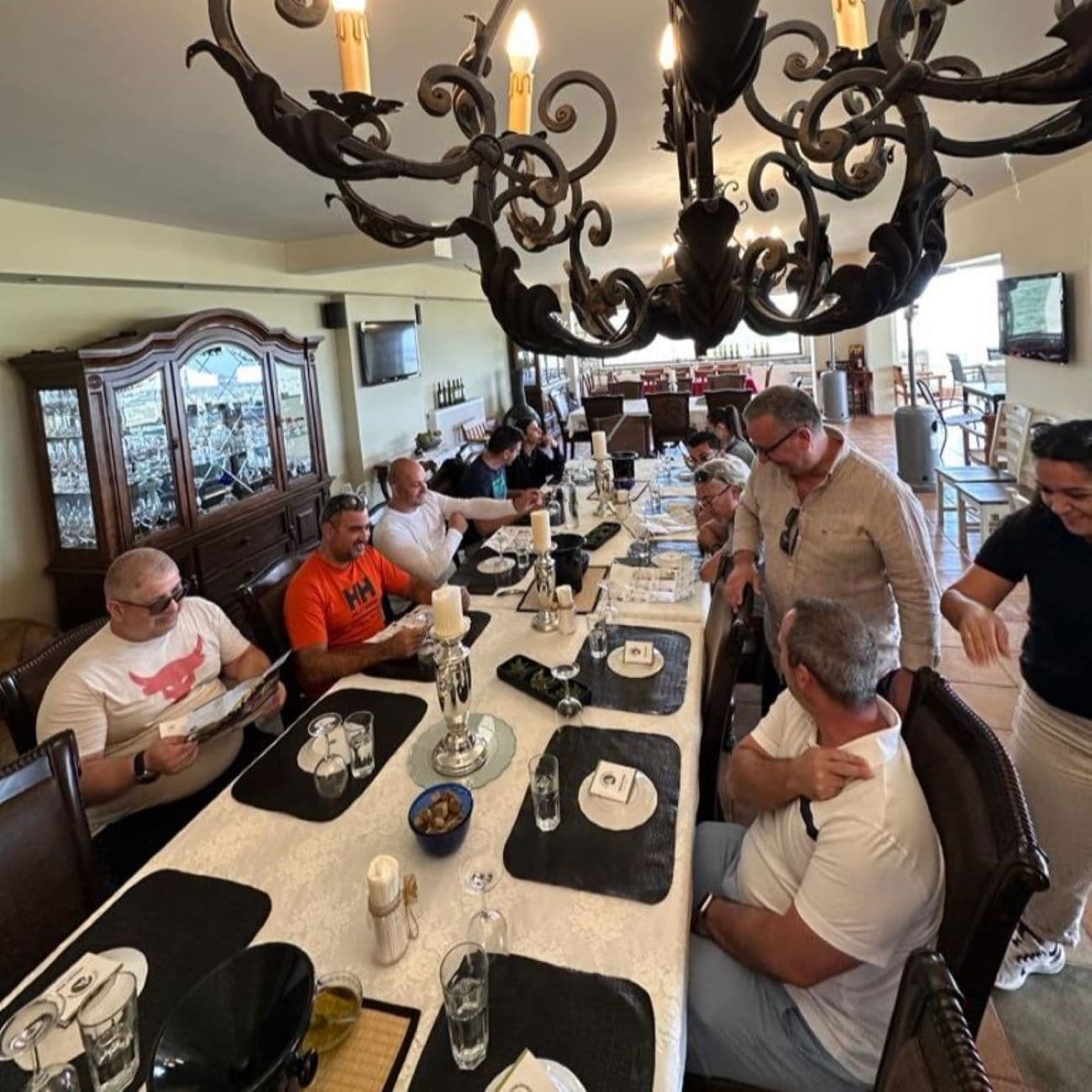
Heraklion, Greece
Premium Private Wine Tour: Two Wineries and Traditional Lunch in Crete
A private 6-hour tour of two family-owned wineries in Crete's wine regions, including guided vineyard and cellar tours, tastings of 10 local wines paired with local produce, and a traditional Cretan lunch in a village tavern.
Small group · max 8
5.0from 30+ reviews
Free cancellation up to 24h before
6h
From €450 / group
View Activity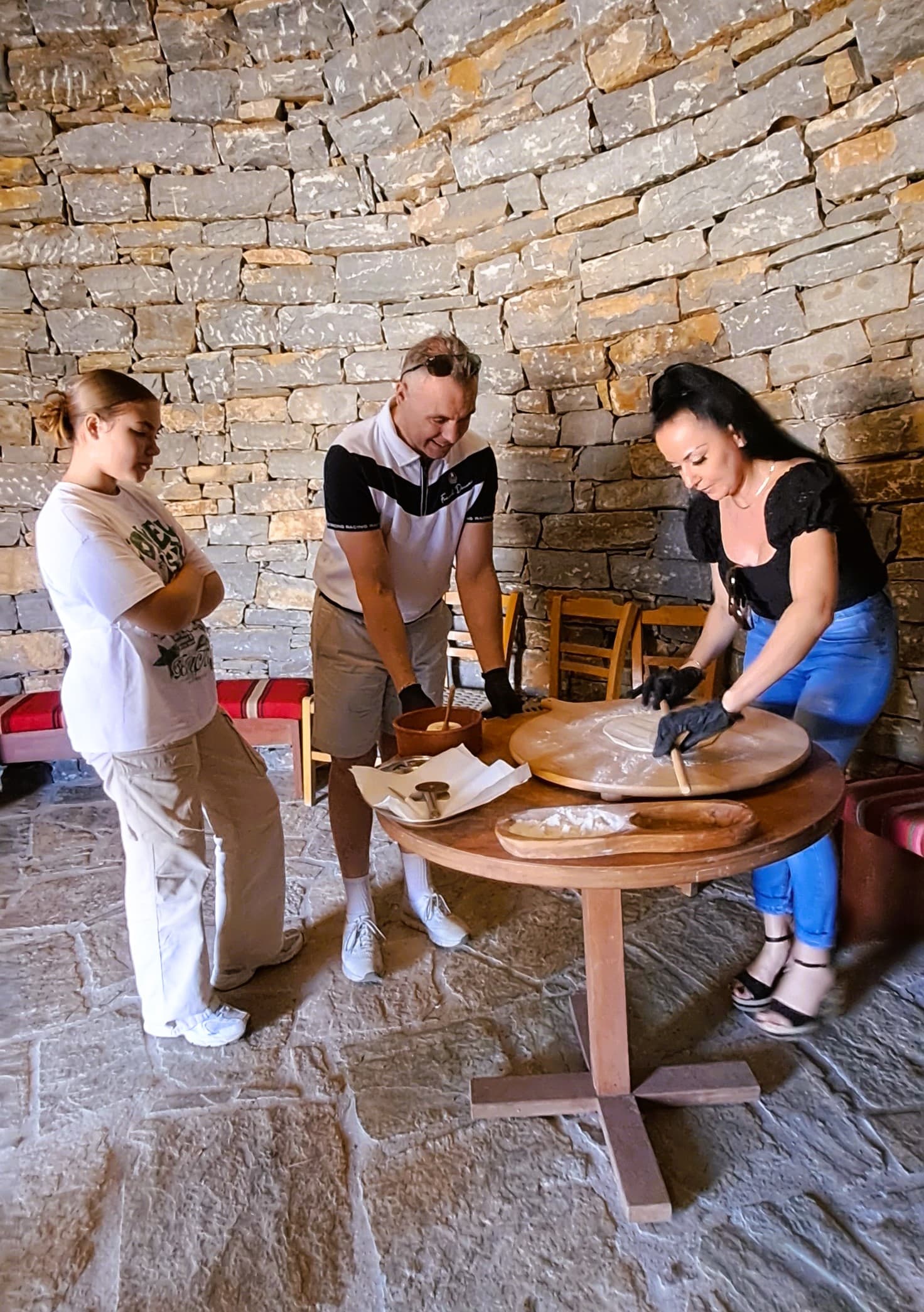
Heraklion, Greece
Shepherd's Life – Psiloritis Mountain Private Tour (7 Hours)
A private full-day tour into the mountains of central Crete, combining a guided visit to Sfendoni Cave, a hands-on shepherd's farm experience with cheese-making, and a traditional Antikristo lamb lunch cooked over an open fire in the UNESCO-protected Psiloritis Natural Heritage Park.
Small group · max 8
Free cancellation up to 24h before
7h
From €500 / group
View Activity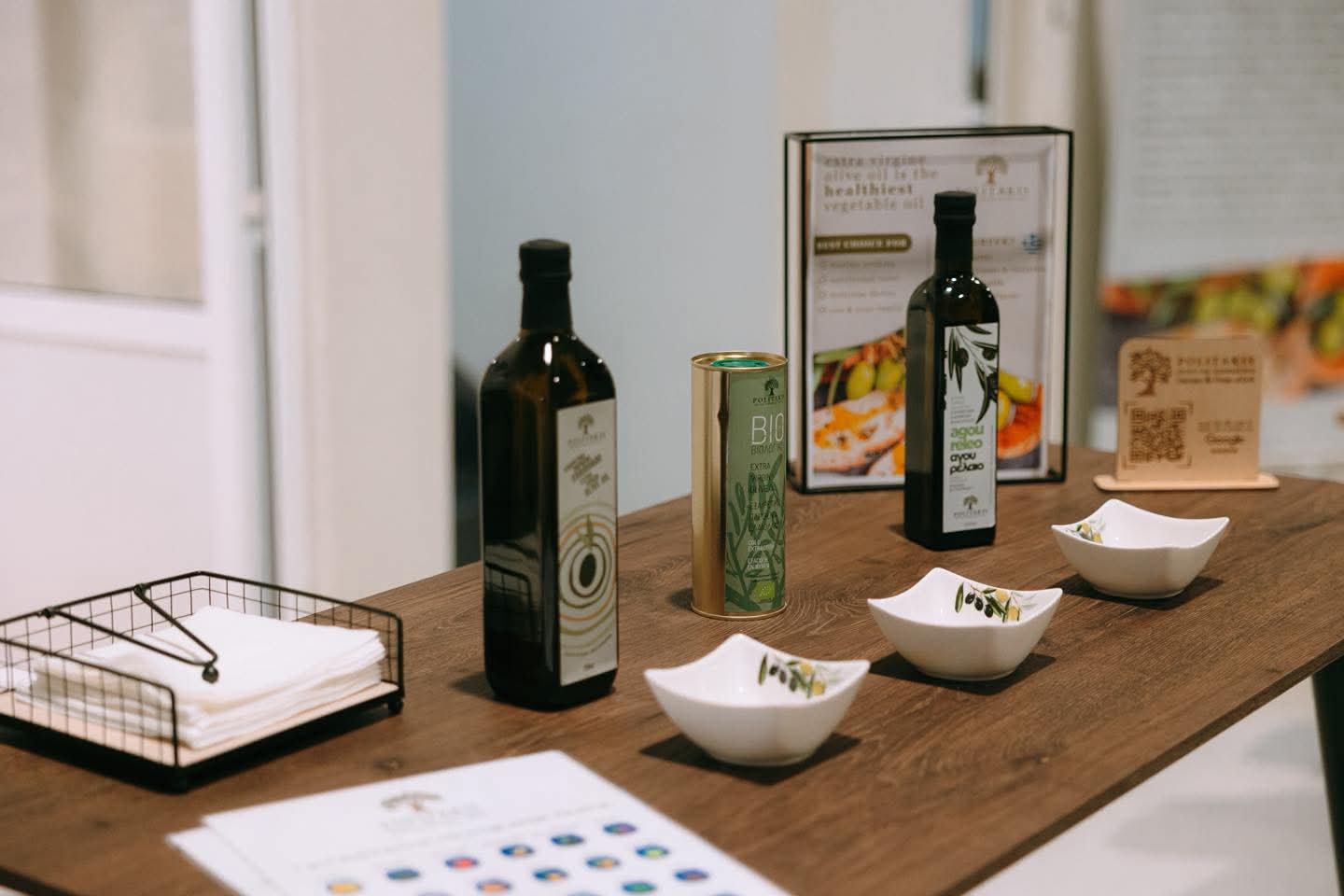
Heraklion, Greece
Cretan Cuisine: A Culinary Journey with Cooking & Olive Oil Tasting
A private 6-hour tour through Cretan food traditions, running daily from April to November. Groups of 2–8 guests visit a working olive grove and traditional mill, taste fresh olive oils with local food, then cook a traditional Cretan meal alongside a local chef. The day ends with a sit-down lunch and homemade wine.
Small group · max 8
Free cancellation up to 24h before
6h
From €500 / group
View ActivityThis page describes the subject rather than any one product. Operators, routes, producers and inclusions change between seasons, and a working mill or still depends on the harvest rather than on a schedule. Treat any itinerary as a starting point and confirm the details that matter to you before booking, wherever you book it.
Guide last updated on