
Culture & history · Heraklion
Culture and history in, and from, Heraklion
Three very different days share this one label: a walk through the old town, a visit to the Minoan site of Knossos about 5 km to the south, or a road excursion that only uses Heraklion as its starting point. Here is what each one actually is, what survives, what was rebuilt, and what to ask before you book.
Old town, on footKnossos: about 5 km southMuseum: 27 roomsOpen all yearSummer heat shapes the day
Where
City, Knossos, or beyond
Knossos
About 5 km south
Getting there
Direct city bus
Main museum
Seven millennia, 27 rooms
Season
Year round
Hardest month
Heat, not rain
Ask first
Who interprets the site
What this actually is
- Three different geographies under one label: inside the city, at Knossos, or simply departing from Heraklion.
- A subject you can approach on foot in the old town, outdoors at an archaeological site, or indoors in a museum.
- A place where interpretation carries much of the value, because a great deal of what survives is fragmentary.
- Genuinely layered: the Minoan story at Knossos, then Arab, Byzantine, Venetian, Ottoman and modern phases in the city itself.
- Legitimately a museum day, if heat, mobility or limited time make an outdoor site harder.
- Much bigger than one site. Three of the six Minoan palatial centres inscribed by UNESCO in 2025 stand in this regional unit, and the capital of Roman Crete stands south of them.
What it is not
- Not automatically a tour of Heraklion city. A product filed under Heraklion may spend most of its day somewhere else entirely.
- Not a walk into an intact Minoan palace. Knossos combines authentic remains with documented early twentieth-century reconstruction.
- Not evidence of the Minotaur or the Labyrinth. Those belong to Greek mythology and later tradition, not to archaeology.
- Not a UNESCO listing for the whole city. Knossos itself is listed, but only as one of the six Minoan Palatial Centres — the listing does not cover the rest of Heraklion.
- Not a guarantee that a registered guide will interpret the site. The words guide, driver-guide, host and escort are used inconsistently.
Where they go
Three different days wear the same label
"Heraklion" can mean a city, a wider regional unit, or simply the market a tour departs from. That matters more here than almost anywhere else in Crete, because the three things sold as Heraklion culture and history happen in three different places, and only one of them is the old town.
The first is a compact walk through central Heraklion, where the most visible historic fabric is mainly medieval and later. The second is Knossos, a separate open-air archaeological site roughly 5 km south of the centre, reached by road or by a direct city bus. The third is a road excursion that collects you in Heraklion and then spends most of the day elsewhere, sometimes in a different regional unit altogether.
None of these is better than the others. But the label a tour is filed under does not tell you where the day actually happens, so it is worth settling that first.
This loads Google Maps, switches on functional cookies and lets Google set its own cookies. You can change this in the cookie settings at any time.
Central Heraklion
Knossos
The two fixed points of the city-or-Knossos question, at the scale that shows the 5 km between them. The wider heritage of the regional unit has its own map further down, because adding it here would squash these two markers into one.
In the city
Central Heraklion, on foot
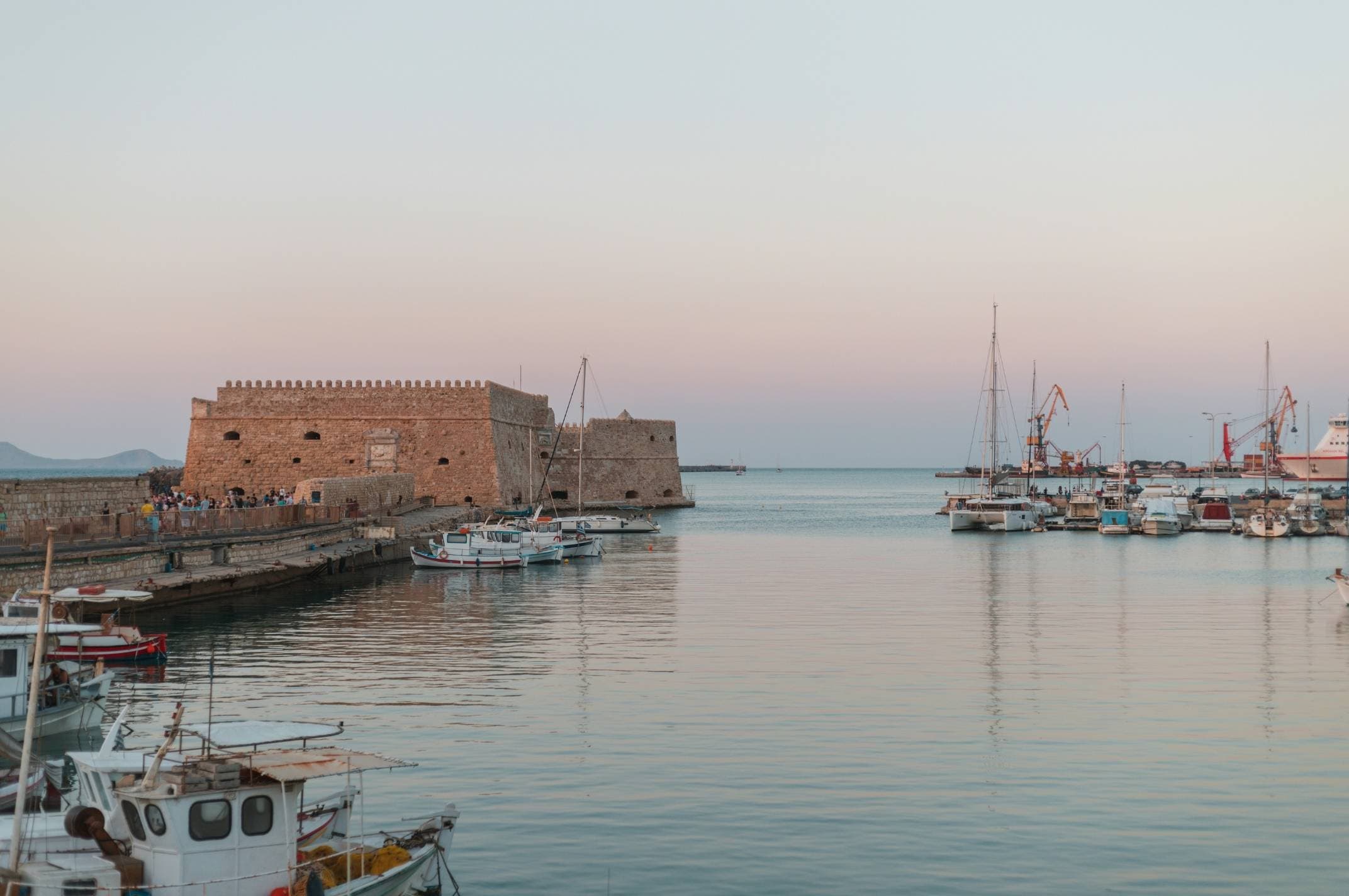
The old harbour, the Venetian civic buildings, the churches, the market streets and the walls. Mostly an exterior-led walk unless entrances are named.
At Knossos
About 5 km south of the centre
A separate open-air archaeological site on Kephala hill. It requires transport from the city and is normally served by a direct urban bus.
From Heraklion
Further out, by road
Two more World Heritage palaces at Phaistos and Malia, the Roman provincial capital at Gortyna, and the Minoan villas at Tylissos, then plateaux, monasteries and mountain villages beyond those. Expect a substantial road component, and check whether the day stays in this regional unit at all.
Choose
Choose by place and period first
Decide what you want to understand before you compare itineraries. More stops do not automatically make a better culture tour.
Heraklion itself
For understanding the city you are standing in
A central walk, and the Historical Museum of Crete for everything from the early Christian period to the present. This is the choice that explains the streets outside your hotel.
Minoan Crete
For the Bronze Age story
Knossos, the Heraklion Archaeological Museum, or both, and then Phaistos, Malia or Tylissos if one palace turns out not to be enough. The site gives you scale and setting; the museum holds the original finds and wall paintings.
Later Cretan history
For Venice, the Ottoman city and the modern era
Cretan School icons, El Greco, Nikos Kazantzakis, the Second World War and rural everyday life. A different and often quieter Crete than the Bronze Age one.
Living culture beyond the city
For landscape, villages and food
Agriculture, wine, pastoral life and mountain villages. Rewarding, but a food, wine or village stop is not automatically a historical tour. Check what is actually interpreted.
The city
What a walk through the old town is like
Compact, coherent and mostly outdoors. Its value depends almost entirely on the interpretation.
The municipality's own route links the old harbour and Koules, the pedestrianised 25 August Street, Agios Titos, the Loggia, St Mark, the Morosini Fountain, the market, St Minas, St Catherine, the Archaeological Museum and the Venetian walls. It is a genuinely walkable circuit rather than a set of scattered sights.
What makes it work is that these buildings are not an unrelated checklist. They can be read through a handful of civic functions: how the city drank, how it governed itself, how it worshipped, how it traded and how it defended itself. Once you have those five threads, the façades start to explain each other.
One caveat worth settling in advance. Much of this is an exterior experience. "See the Loggia" can mean standing in front of it, and current uses, interior access, restoration work and opening times all change independently of each other.
Five threads to read the city through
Water
The Morosini Fountain was part of a wider water-supply project, not simply decoration.
Government
The Loggia was associated with government and the civic life of the Venetian elite.
Worship
St Mark served as the Venetian cathedral and ducal church; St Minas and St Catherine carry the Orthodox story.
Trade
The arsenals beside the old harbour express the commercial working life of the port.
Defence
Koules and the circuit of Venetian walls show how much of the city was built to withstand siege.
The main stops
Koules Fortress
The sea gate of the harbour. Defence and trade in one building.
The Loggia
Government and elite civic life under Venice. Now the city hall.
Morosini Fountain
The public face of a water-supply project, on the square locals still meet in.
Agios Minas Cathedral
The large Orthodox cathedral, and the centre of the city's religious life.
Agia Aikaterini
Museum of Christian Art. Cretan School icons and the artistic life of Venetian Candia.
Heraklion Archaeological Museum
Seven millennia of Cretan history across 27 rooms. The Minoan originals live here.
Historical Museum of Crete
Early Christian period to the present: Ottoman and modern society, war, ethnography, El Greco, Kazantzakis.
Martinengo Bastion
Part of the Venetian wall circuit, and the easiest place to grasp its scale.
On the map
This loads Google Maps, switches on functional cookies and lets Google set its own cookies. You can change this in the cookie settings at any time.
Eight anchors on the central route. Agios Titos and St Mark sit between them, close to the Loggia.
Walking past a building does not mean going inside it. Ask which of these are entered, which are exterior or photo stops, and whether any admissions are included.
Knossos
What to expect at Knossos
The most rewarding preparation you can do is to know, before you arrive, which parts you are looking at.
Knossos is an open-air archaeological site with a long sequence beginning in the Neolithic period. Excavated rooms, courts, storage areas, circulation routes and surviving fabric are all genuinely there, and the setting on Kephala hill does something no museum case can do: it gives you the scale and the spatial logic of the place.
It also contains large concrete reconstructions built by Arthur Evans in the early twentieth century. UNESCO records this as a genuine question about the site's authenticity, while still recognising that a great deal of the original survives. Both of those are true at once: the rebuilt parts are not original, but the site as a whole is not a fake.
The single most common disappointment here comes from expecting an intact palace, or a literal labyrinth. What actually rewards the visit is understanding a fragmentary, heavily interpreted site, including the history of its own excavation.
Genuinely ancient
- Excavated rooms, courts and storage areas
- Circulation routes through the complex
- Surviving structural fabric across a long sequence
- The hillside setting and the scale of the site
Reconstructed, and documented as such
- Early twentieth-century reinforced-concrete reconstruction by Arthur Evans
- The most photographed columns and upper structures
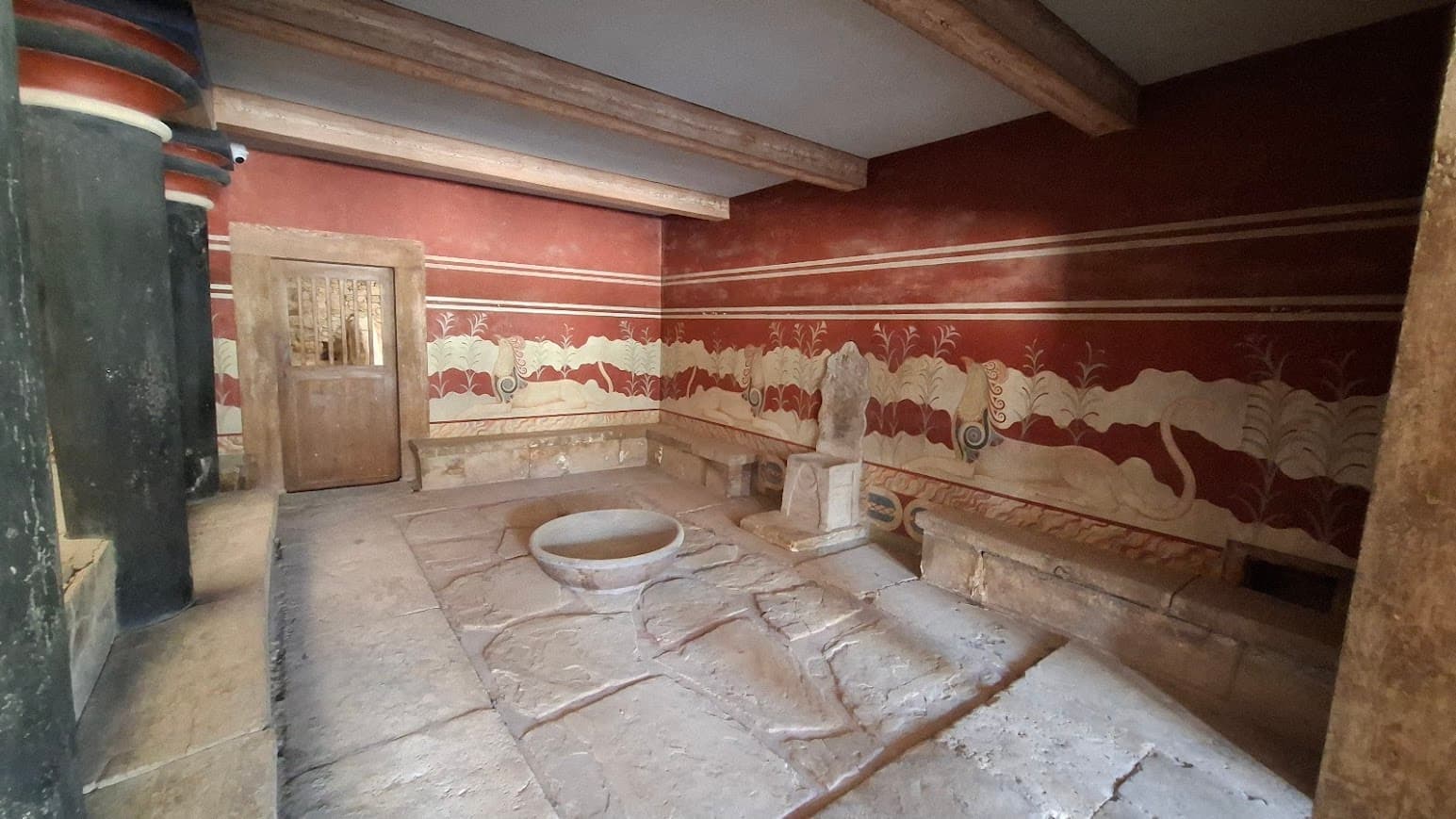
- Wall paintings shown at the site, which include reproductions and reconstructed presentations
- Many of the original finds and wall paintings are held by the Heraklion Archaeological Museum
Myth
Minos, the Minotaur and the Labyrinth
These belong to Greek mythology and to later cultural tradition. Official sources are explicit about that. The complexity of the palace plan helped sustain the Labyrinth association over the centuries, but the stories are cultural legacy rather than archaeological proof. They are worth hearing. They are not worth mistaking for the excavation record.
UNESCO
Knossos is one component of the Minoan Palatial Centres, inscribed by UNESCO in 2025 together with Phaistos, Malia, Zakros, Zominthos and Kydonia. The listing covers those centres, not the whole of Heraklion or the whole island.
Beyond the city
The rest of the regional unit
Two more World Heritage palaces, the capital of Roman Crete, and a set of villas twenty minutes out
The UNESCO inscription of 2025 covers six Minoan palatial centres, and three of them stand in this regional unit: Knossos, Phaistos and Malia. Add the Roman provincial capital at Gortyna and the Minoan villas at Tylissos, and the subject is a great deal larger than one site 5 km from the ferry terminal.
That matters for one decision in particular. If the early twentieth-century reconstruction at Knossos is the thing that puts you off, Phaistos is the direct answer to it. The Italian school excavated it and did not rebuild it in concrete, so what you walk through is close to what the excavators uncovered. The two sites teach the same civilisation in opposite registers, and seeing one of each is a more interesting pair of days than seeing either kind twice.
None of this requires a tour. These are public archaeological sites reached by road, several with their own interpretation on site. What a guide adds out here is what a guide adds in the city: the connective tissue between the things that survive.
Tylissos
About 16 km westThree Minoan villas inside a working village, excavated early and far quieter than the palaces. The closest thing to a Minoan site you can visit without a coach park, and a useful corrective to the scale of Knossos.
Malia
About 33 km eastThe third of the World Heritage palatial centres in this regional unit, on the north coast behind a busy resort strip. The palace plan reads clearly on the ground, which makes it easier to understand as a building than Knossos is.
Gortyna
About 35 km southNot Minoan at all, which is the point: this was the administrative capital of the Roman province of Crete and Cyrenaica. A theatre, a basilica, and the Gortyn law code, the most extensive monument of Greek law surviving from before the Hellenistic period, found here in 1884.
Phaistos
About 43 km south westThe second of the palatial centres, on a ridge above the Messara plain, and the unreconstructed counterweight to Knossos. The finest portable finds from its neighbour Agia Triada, the Harvester Vase and the Chieftain Cup among them, are back in the Heraklion museum.
On the map
This loads Google Maps, switches on functional cookies and lets Google set its own cookies. You can change this in the cookie settings at any time.
Marker 1 is the city itself, for scale. Everything else here sits inside the same regional unit, and the numbers match the list.
The distances above are straight lines from the city centre, not driving distances. The road south crosses high ground to reach the Messara, so do not read kilometres as minutes. Opening arrangements at each site are set separately and change, so check them for your own date.
Site or museum
Knossos, the museum, or both
They answer different questions. Neither one is the runner-up.
The site gives you
- Scale, setting and the spatial relationships between spaces
- The experience of standing in the place itself
- The visible history of excavation and reconstruction
- An outdoor visit, with everything that means for heat and terrain
The museum gives you
- Original wall paintings and portable finds
- Comparative material from across Crete, not only from Knossos
- A clearer chronology, from the Neolithic period to Roman times
- Indoor interpretation, and the best-documented accessible facilities of the main venues
Doing both is a suggestion, not a rule, and no official source sets one best order or length. A combined day is two substantial visits, so plan for a full day rather than a site trip with a museum tacked on. The museum on its own is a perfectly good choice too, especially in strong heat, with limited time or mobility, or if original objects interest you more than ruins.
The layers
Heraklion beyond the Minoans
The city changed hands repeatedly, and changed name each time. Knowing the sequence makes museum labels, historic maps and Cretan literature suddenly legible.
Rabdh al-Khandaq
Arab periodNamed for the fortified ditch that defended it. Everything that follows is a version of this name.
Chandax / Chandakas
Byzantine periodThe Arabic name, absorbed into Greek after the Byzantine reconquest.
Candia
Venetian periodThe same name again, in Venetian form. It came to stand for the whole island in European usage, which is why old maps label Crete as Candia.
Kandiye / Kastro
Ottoman periodKandiye in Ottoman use, and Kastro locally. Megalo Kastro survives in Cretan memory and literature.
Heraklion
ModernThe modern name, drawn from antiquity rather than from the medieval sequence that preceded it.
Transliteration varies between sources, so no single Latin spelling is the correct one. If a museum label, a map or a novel uses a name you do not recognise, it is very likely one of these.
Season
Timing, heat and crowds
Culture and history work in every season here. What changes is how comfortable the outdoor half of it is.
Heraklion summers are characteristically hot and dry, and this is the one factor that genuinely reshapes an outdoor day. Knossos has closed for part of a day during an extreme-heat event, including an official closure between 13:00 and 17:00 on 21 July 2026. That proves same-day disruption is possible; it is not a standard closure window or a fixed temperature threshold. Check same-day notices, carry water, and plan outdoor walking for a cooler part of the day.
November to February
Cooler and wetter. Comfortable for walking when it is dry, and the city museums are a genuine alternative rather than a fallback when it is not.
March to May
The easiest conditions for combining an outdoor site with a walk. Venue calendars still change, so confirm for your date.
June to August
Hot and dry, with limited shade at Knossos and peak visitor pressure. Plan the outdoor part early, and keep an indoor option in reserve.
September to October
Heat eases through the period while daylight stays generous. Conditions for walking improve steadily.
Crowds
The Ministry describes Knossos as Greece's second most-visited archaeological site, and peak-season reporting and traveller accounts describe queues, narrow circulation points and waits near the areas everyone wants to photograph. Heat and crowding compound each other. No reliable hourly crowd curve exists, and timed admission does not guarantee a quiet site, so nobody can honestly promise you a crowd-free hour.
What to ask
What to ask before you book
These products differ so much from one another that price alone tells you very little. These questions make unlike itineraries comparable.
Where the day actually happens
- What is the exact meeting point, and where does the day end?
- How much of it is in Heraklion city, at Knossos, or somewhere else in Crete?
- How much time is spent in a vehicle, and how much on foot?
Who interprets, and what you enter
- Which buildings and sites are entered, and which are exterior or photo stops?
- Who provides commentary inside archaeological sites and museums?
- Is that person listed in the Ministry of Tourism Tour Guide Register for your language?
- Are admissions included, and who secures any timed-entry slots?
Pace, terrain and access
- What are the walking distances, surfaces, slopes and number of steps?
- How much standing and waiting is involved, and where are the seating and shade?
- Which parts of the vehicle and each venue are usable with a wheelchair or a stroller?
- What is the group size, and are headsets used?
When plans change
- What happens to the route, admissions and refunds after a heat closure?
- Is there an indoor alternative, or an option to reschedule?
- What are the current dress, photography and access rules for any religious venue?
Before you book
Summer heat can close an outdoor site at short notice. Before booking a hot-month itinerary, establish what happens to your admissions, route and money if that occurs.
"Guided" does not reliably mean a registered tour guide will interpret the archaeological site. Guide, driver-guide, host and escort are used inconsistently across the market, so ask directly.
Ticket arrangements between Knossos and the Archaeological Museum have changed over time, and current sources do not agree on whether a combined ticket applies. Check the live ticket system rather than an older description.
Accessibility depends on the exact route, not the category. The Archaeological Museum documents its accessible facilities in detail; the current reduced-mobility route at Knossos is not documented precisely enough to promise, so ask the site and the operator directly.
Opening times, timed-entry rules, bus timetables and temporary closures all change independently of each other. Confirm each venue for your intended date rather than trusting a single summary.
The churches on this route are living places of worship. Entry, services, dress, photography and access conditions can change without notice.
FAQ
Frequently asked questions
Are Heraklion culture tours actually in Heraklion?
Not always. Some take place in the historic centre, some at Knossos about 5 km south, and some use Heraklion only as a pickup point before spending most of the day elsewhere in Crete. Check the stated activity area rather than the category label.
Is Knossos walkable from the old town?
It is about 5 km south of the centre, so it is a separate journey rather than an extension of a city walk. Most visitors go by bus, taxi or organised transport.
Can I reach Knossos by public bus?
Yes. Knossos is normally served by a direct service on the Heraklion urban bus network. Route numbers, stops, frequency and the last return change, so check the current operator timetable for your date rather than relying on a number quoted anywhere else.
What is original and what is reconstructed at Knossos?
Excavated rooms, courts, storage areas, circulation routes and much surviving fabric are genuinely ancient. The most photographed columns and upper structures are largely early twentieth-century reinforced-concrete reconstruction by Arthur Evans, and the wall paintings shown at the site include reproductions. Neither fact cancels the other out.
Is the Labyrinth visible?
No. The Labyrinth, the Minotaur and King Minos belong to Greek mythology and later tradition. The complexity of the palace plan helped the association endure, but there is no labyrinth to walk through.
Is Knossos UNESCO-listed?
Knossos is one of six components of the Minoan Palatial Centres, inscribed in 2025 alongside Phaistos, Malia, Zakros, Zominthos and Kydonia. The listing covers those centres, not the city of Heraklion or the island as a whole.
Should I visit Knossos, the Archaeological Museum, or both?
They answer different questions: the site gives scale and setting, the museum holds the original finds and a much wider chronology. Many visitors do both, but no authoritative source establishes a best order or duration, and a combined day contains two substantial visits.
What if I am more interested in Venetian or modern Crete?
Then the city itself is your subject. A central walk covers the Venetian civic and defensive fabric, the Historical Museum of Crete covers the early Christian period to the present, and the Museum of Christian Art at Agia Aikaterini covers Cretan School icons.
Does "guided" mean a registered guide?
Not necessarily. Professional tour guiding in Greece is regulated and the Ministry of Tourism maintains a public register, but product wording is inconsistent. Ask specifically who will interpret the site, in which language, and whether that person appears in the register.
Are admission tickets included?
It varies by product, and it is one of the biggest hidden differences between two similarly priced tours. Confirm which admissions are included and who is responsible for securing any timed-entry slots.
How much walking and standing is involved?
It depends entirely on the format. An indoor museum, an old-town walk, an open-air archaeological site and a full-day road excursion are not physically equivalent. Ask for walking distance, terrain, steps, standing time, vehicle time and breaks for the specific itinerary.
What happens if heat or a closure disrupts the day?
There is no category-wide policy, which is exactly why it is worth asking before booking. Establish what the operator does about changed admissions, an indoor alternative, rescheduling and refunds.
Which options have documented step-free access?
The Heraklion Archaeological Museum documents the most: a ramp at the main entrance, lifts to both exhibition levels, a wheelchair on request, accessible toilets, Braille leaflets and touch tours by prior arrangement. Knossos has had accessibility works, but its current route is not described precisely enough to promise. Confirm loan equipment and arranged services in advance.
Are churches entered or only seen from outside?
That varies by itinerary, and these are working places of worship, so services, dress codes and photography rules apply and can change. Ask which are entered and what the current conditions are.
Is there a minimum age?
No age rule applies across the category. Any minimum age, pace or restriction comes from the individual itinerary and operator, so check the product you are considering.
Settle three things before you book: where the day actually happens, who will interpret it, and what you are entering rather than walking past. Everything else about a Heraklion culture day tends to follow from those answers.
Bookable now
Culture and history experiences from Heraklion
These are the experiences currently bookable. Read each one against the questions above, because what they include, where they go and who interprets them varies a great deal.
Trips are ordered by our recommendation. Ranking is never paid placement.
Heraklion, Greece
Knossos and Wine: History and Flavours Tour in Crete – 6 Hours
Explore the Palace of Knossos with a guided tour of its Throne Room and frescoes, then visit a countryside winery to taste Vilana and Kotsifali wines and extra virgin olive oil, finishing with a traditional Cretan meal at a local tavern.
Small group · max 10
Free cancellation up to 24h before
6h
From €99 / person
View Activity
Heraklion, Greece
Lasithi Plateau & Zeus Cave: Myths and Villages Tour – Full Day from Heraklion
A full-day tour from Heraklion covering the Lasithi Plateau, a traditional olive mill with tasting, the Windmills of Lasithi, a choice between the Cave of Zeus or a Minoan mythology park, Panagia Kera Monastery, a traditional Cretan lunch, and the ancient village of Krasi.
Small group · max 8
4.9from 40+ reviews
Free cancellation up to 24h before
7h
From €90 / person
View Activity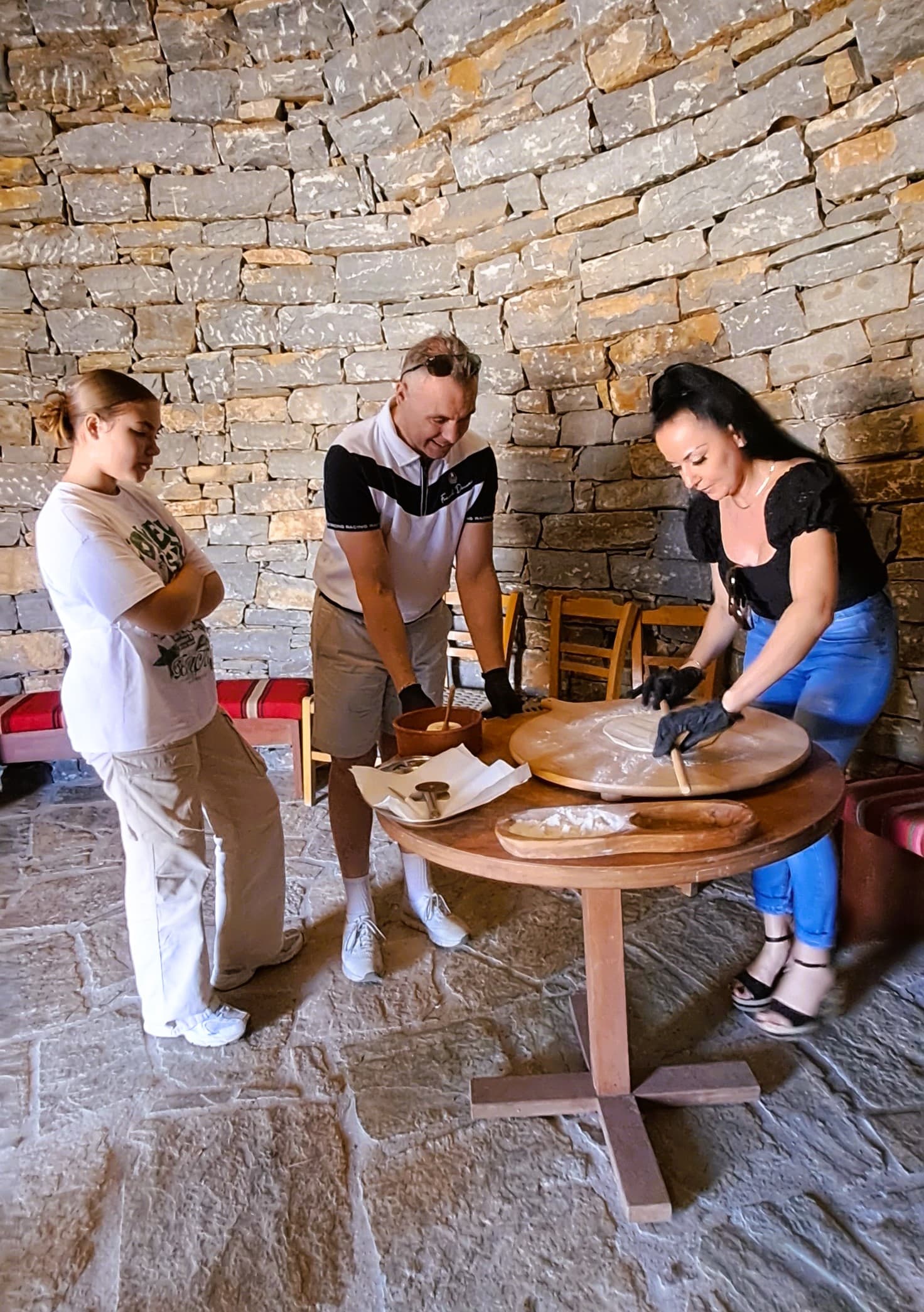
Heraklion, Greece
Shepherd's Life – Psiloritis Mountain Private Tour (7 Hours)
A private full-day tour into the mountains of central Crete, combining a guided visit to Sfendoni Cave, a hands-on shepherd's farm experience with cheese-making, and a traditional Antikristo lamb lunch cooked over an open fire in the UNESCO-protected Psiloritis Natural Heritage Park.
Small group · max 8
Free cancellation up to 24h before
7h
From €500 / group
View Activity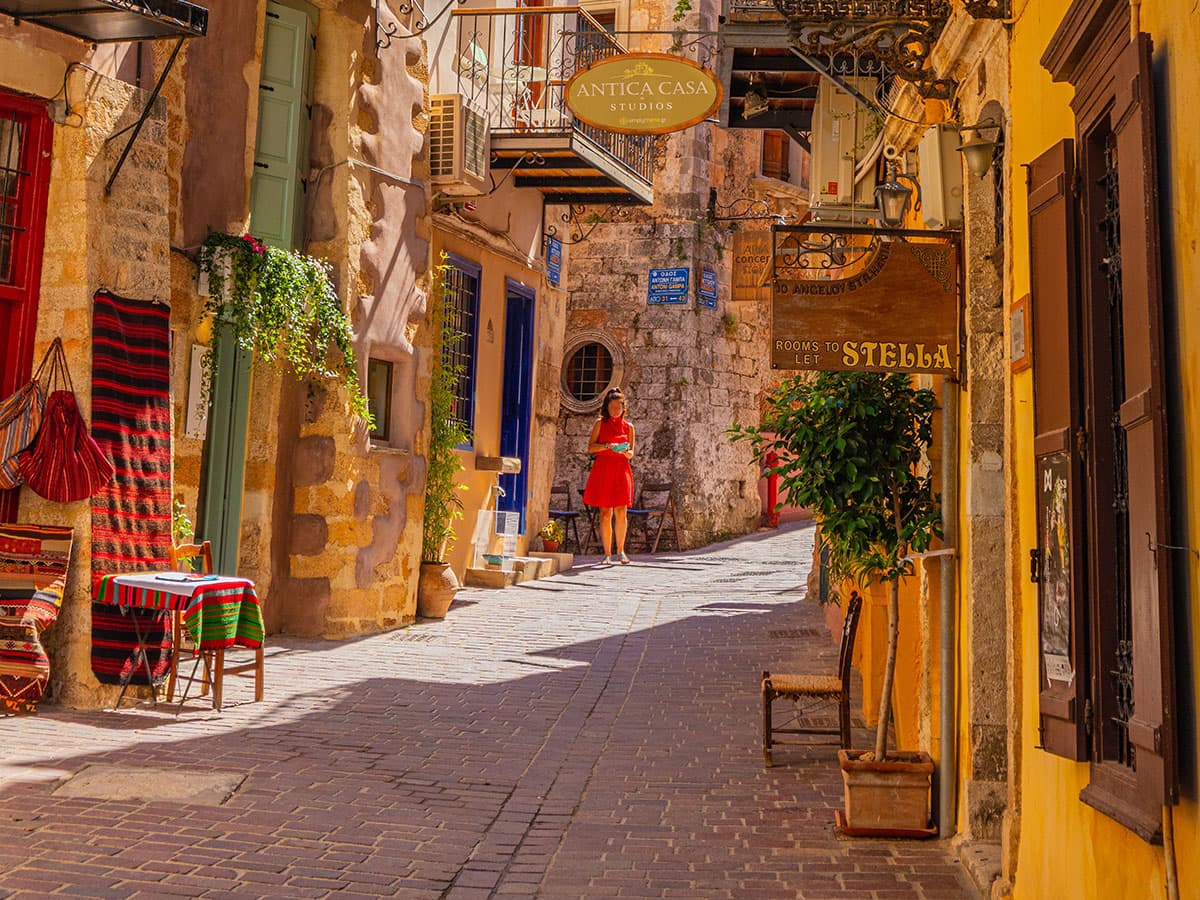
Heraklion, Greece
Full-Day Private Tour: Rethymno, Chania & Kournas Lake from Heraklion
Private 8-hour tour from Heraklion combining a harbour walk in Rethymno, exploration of Chania's Old Town, and a lakeside lunch stop at Kournas Lake. Hotel pickup available from accommodation along the north coast, from Agia Pelagia to Malia. For groups of 2–8.
Small group · max 8
Free cancellation up to 24h before
8h
From €450 / group
View ActivityOperators, routes, inclusions and availability change. Details on each experience page take precedence over this guide, and opening times, admissions and timed-entry rules should always be confirmed for your intended date.
Guide last updated on