SantoriniSantorini Food Tours
Santorini Food Tours
Our Santorini food tours are private drives of 3 to 5 hours with pickup, built around a meal of fava, tomato fritters and a Santorini salad, at a family farm, a seaside tavern or on a village route. Some add a spirits, olive-oil or wine tasting. Santorini fava and the small Santorini tomato are both EU-protected (PDO) products.
By The Greek Local · Updated 16 November 2026
Santorini food tours at a glance
- Length
- 3 to 5 hours
- Each tour page gives its own length
- Format
- Private drive with pickup
- Each tour page gives its pickup points
- On every tour
- Fava, tomato fritters, Santorini salad
- Each menu adds its own dishes
- Fresh tomatoes
- Late June to about 20 July
- The main harvest, per the Tomato Industrial Museum
- Alcohol
- Not for anyone under 18
- Greek law
Choose your Santorini food tour
Farm lunch
2 tours- You walk through the farm's vegetable garden and family cellar
- The meal is made with what the farm grows
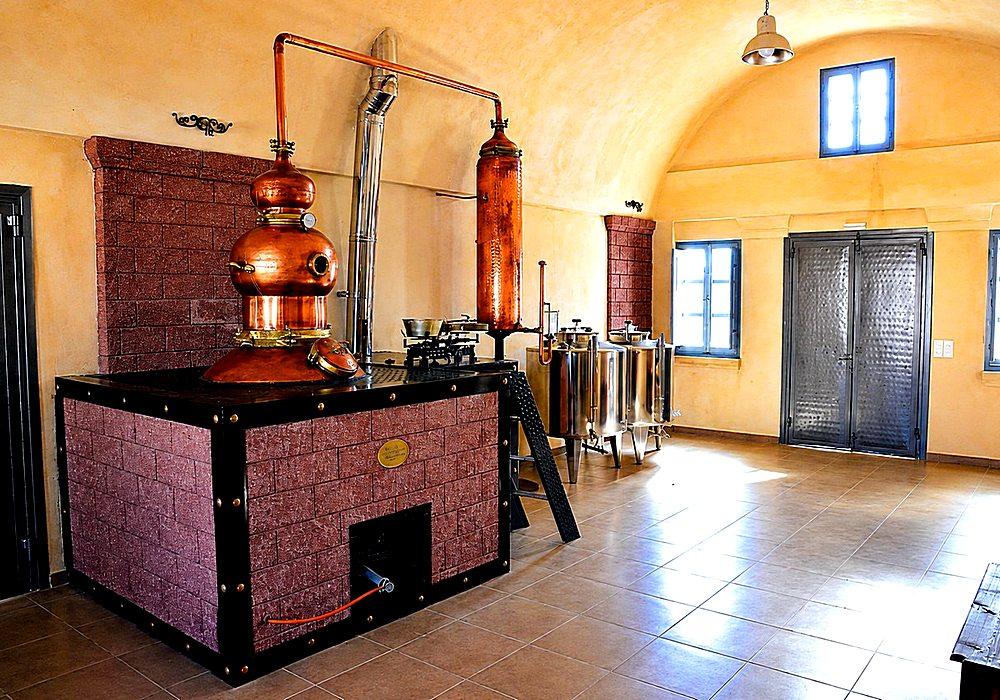
- One adds a spirits tasting at a distillery museum
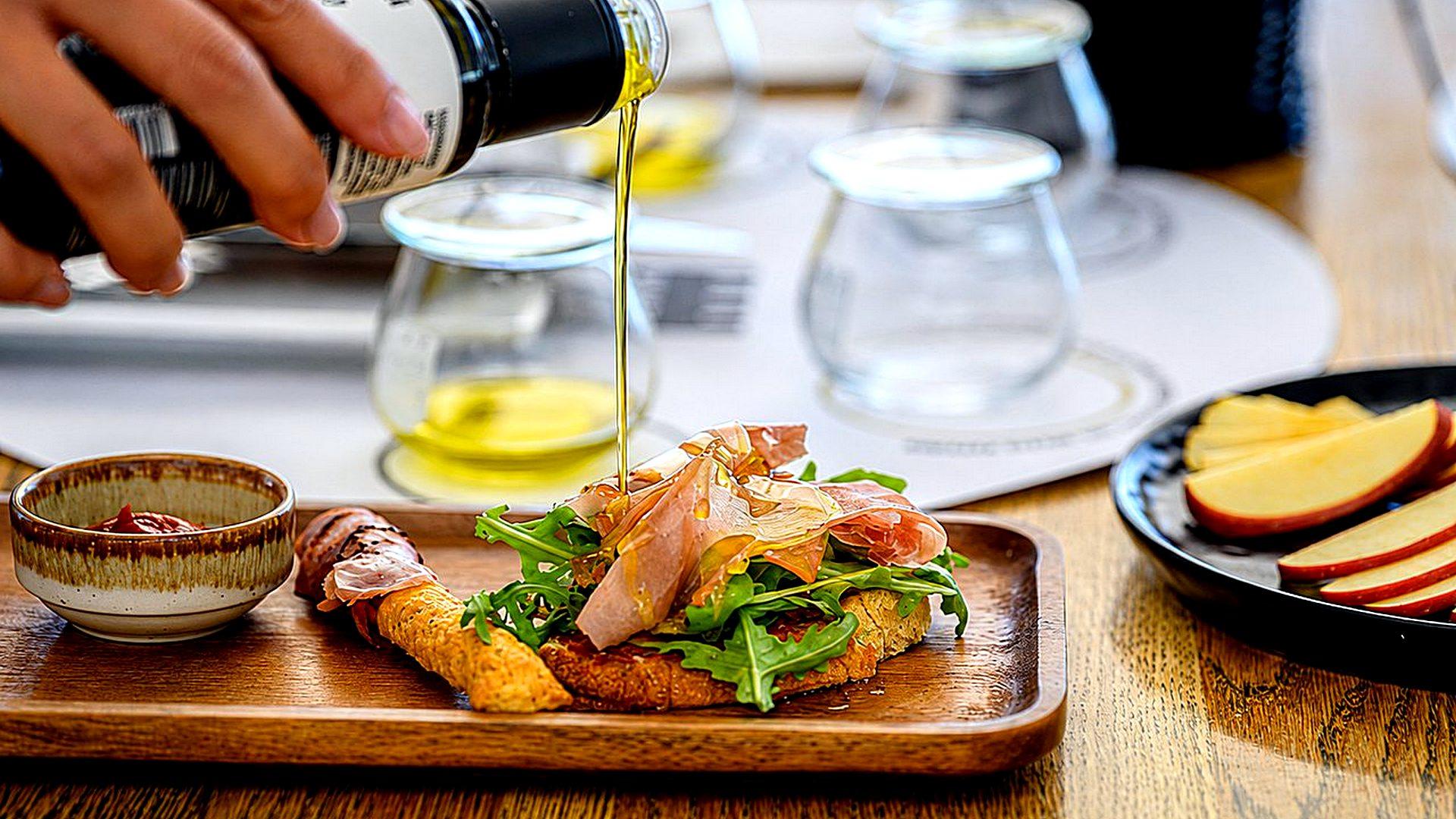
- The other adds an olive-oil tasting
- Lasts 3 hours
Seaside tavern
2 tours- The meal is at a family-run tavern by the sea
- One serves a vegan lunch
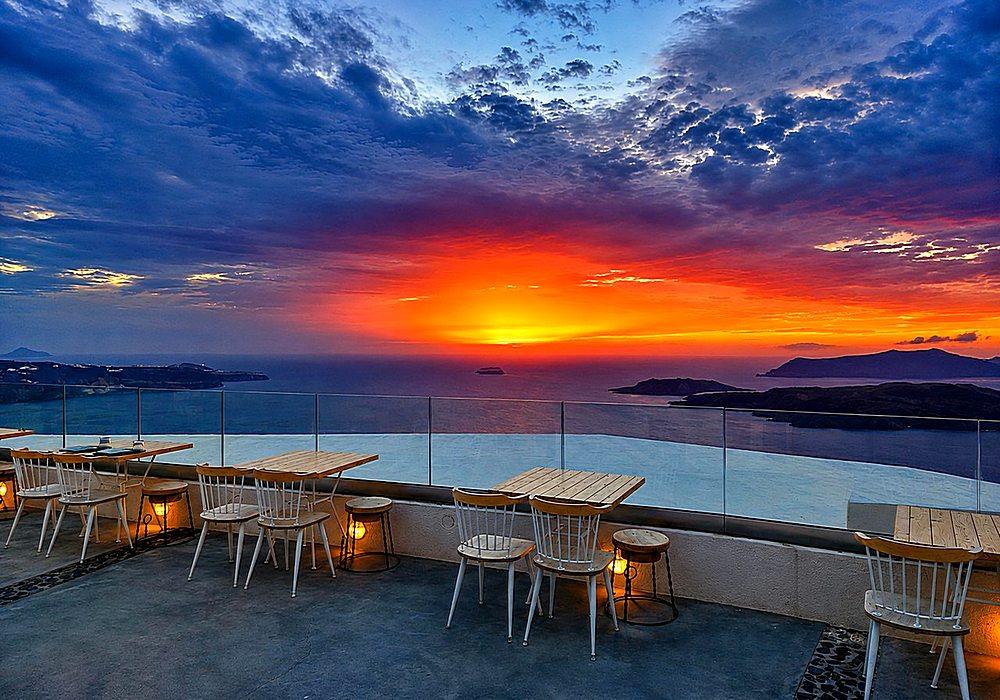
- One is a sunset dinner
- A winery tasting is part of both
- Guests are adults only (18+)
- Lasts 4 hours
Village route
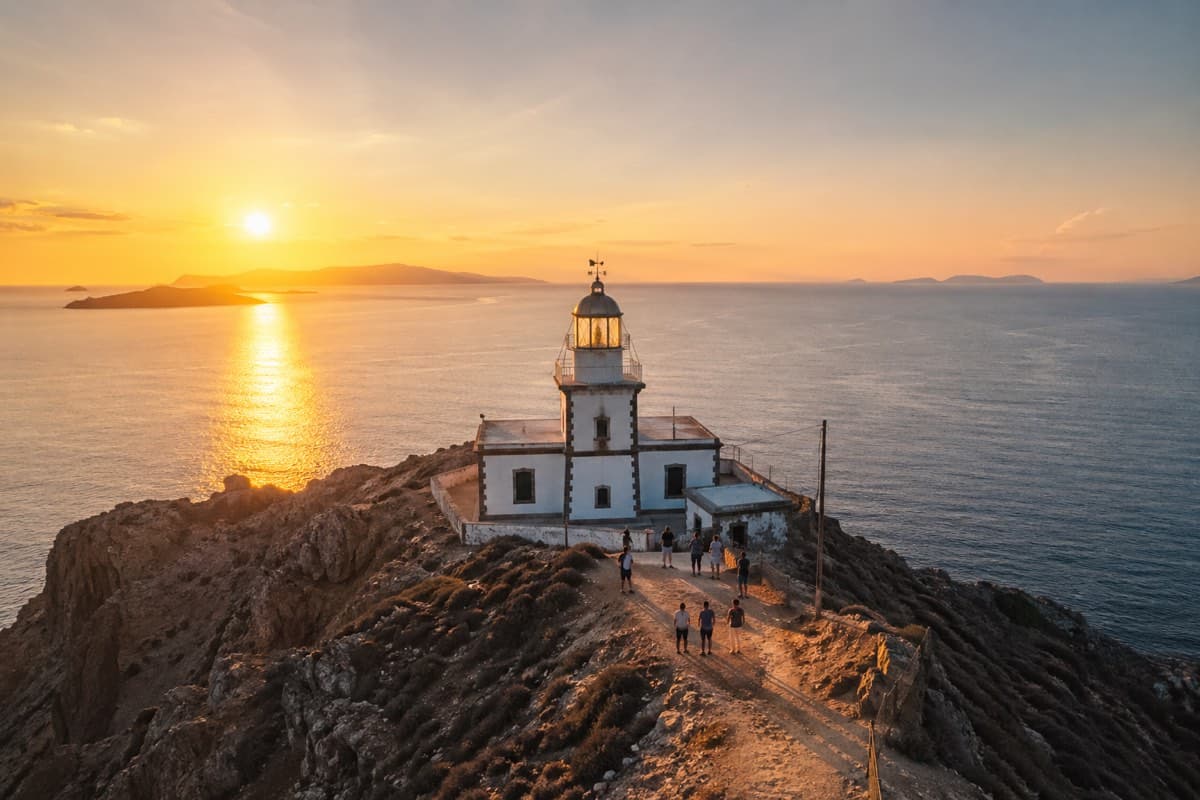
1 tour- Visits Profitis Ilias and Akrotiri lighthouse
- Passes Pyrgos
- Stops in Megalochori
- Food stops include a bakery
- Half a litre of wine comes with the food
- Books from 1 guest
- Lasts 5 hours
What each tour adds
| Option | Tours |
|---|---|
| Option: Private, with pickup | Tours: 5 |
| Option: Spirits tasting (ouzo, tsikoudia, liqueurs) | Tours: 2 |
| Option: Olive-oil tasting | Tours: 1 |
| Option: Wine (a winery tasting or wine with the meal) | Tours: 3 |
| Option: Vegan lunch | Tours: 1 |
| Option: Sunset | Tours: 1 |
| Option: Adults only (18+) | Tours: 2 |
Our food tours in Santorini
Santorini, Greece
Santorini Farm to Table and Spirits Tasting Experience
Taste the authentic side of Santorini with a family farm lunch, local spirits and hidden corners beyond the tourist trail.
Free cancellation up to 24 hours before
3h
From €140 / person
View Activity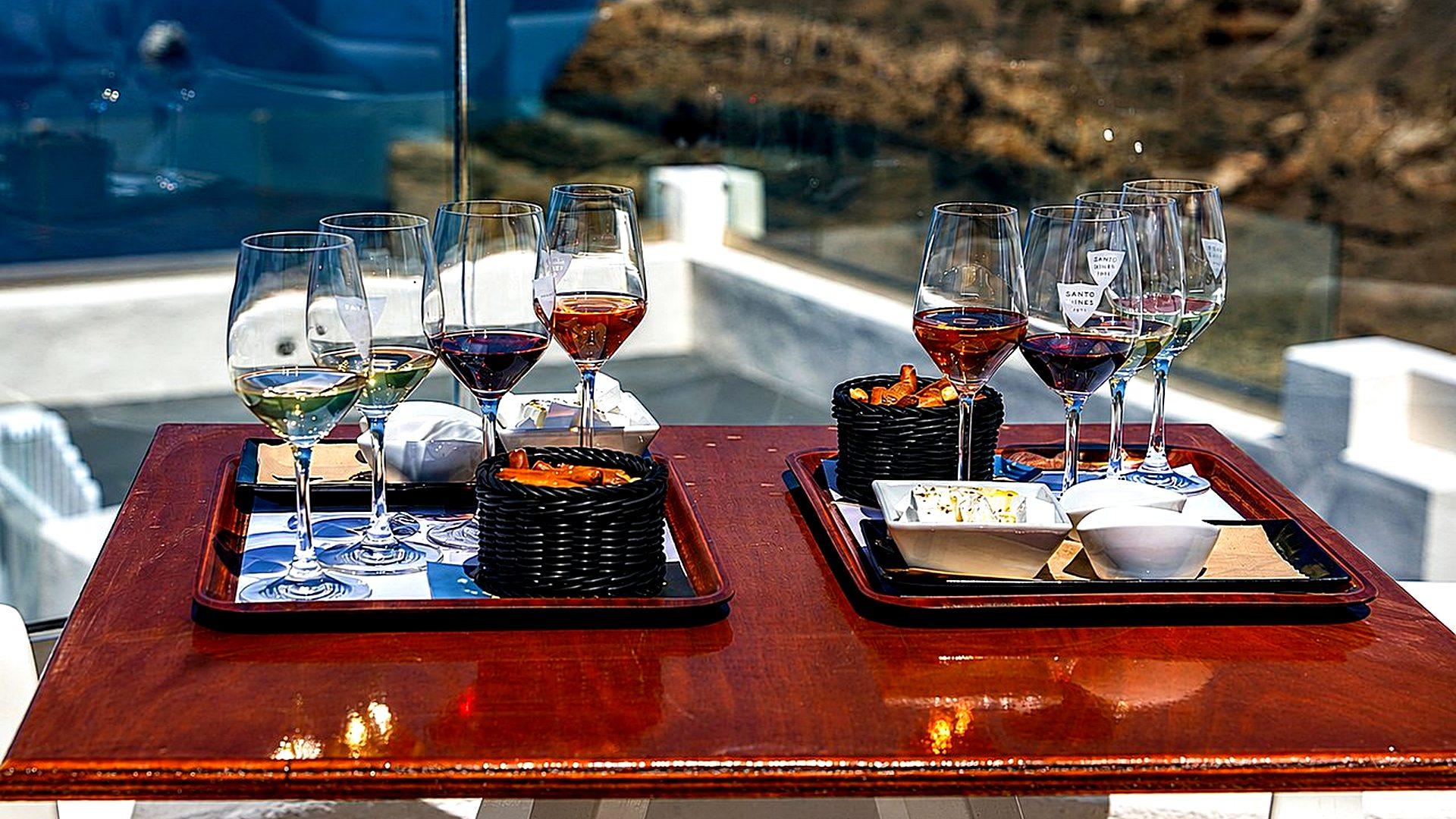
Santorini, Greece
Santorini Vegan Food & Wine Private Tour
Discover Santorini through plant-based local flavors, traditional recipes and island wines in an authentic culinary experience.
Free cancellation up to 24 hours before
4h
From €200 / person
View Activity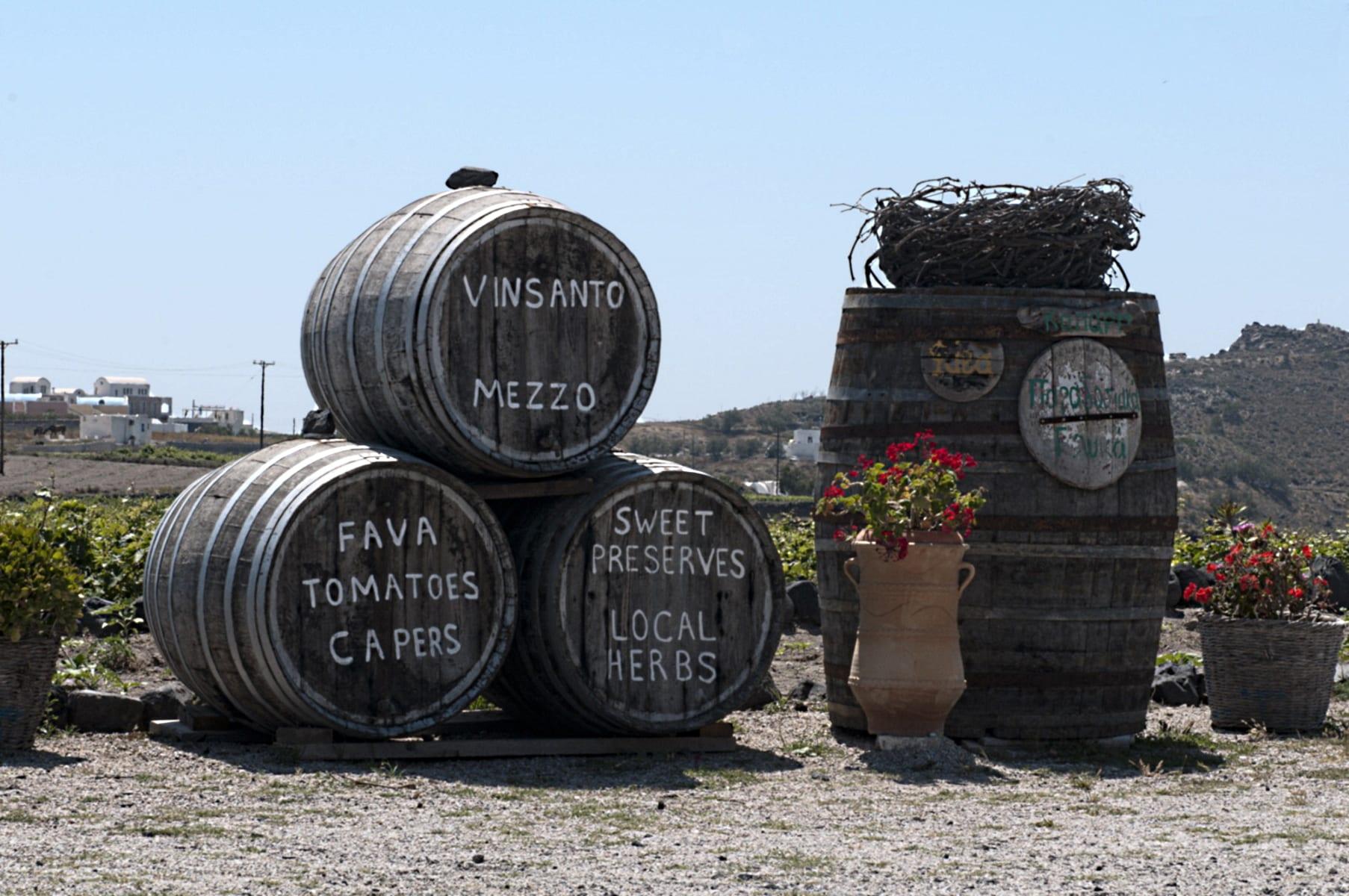
Santorini, Greece
Flavorful Santorini: Private Food and Wine Tour
Experience a more grounded side of Santorini on a private food and wine tour shaped around local delicacies, countryside villages, and farm-to-table flavors. This is a relaxed way to taste the island's authentic food and hear local stories.
Free cancellation up to 14 days before
5h
From €430 per groupFor 2 guests
View ActivitySantorini, Greece
Santorini Olive Oil Tasting and Farm to Table Experience
Taste Santorini through olive oil, local ingredients and a traditional farm-to-table meal in an authentic setting.
Free cancellation up to 24 hours before
3h
From €160 / person
View Activity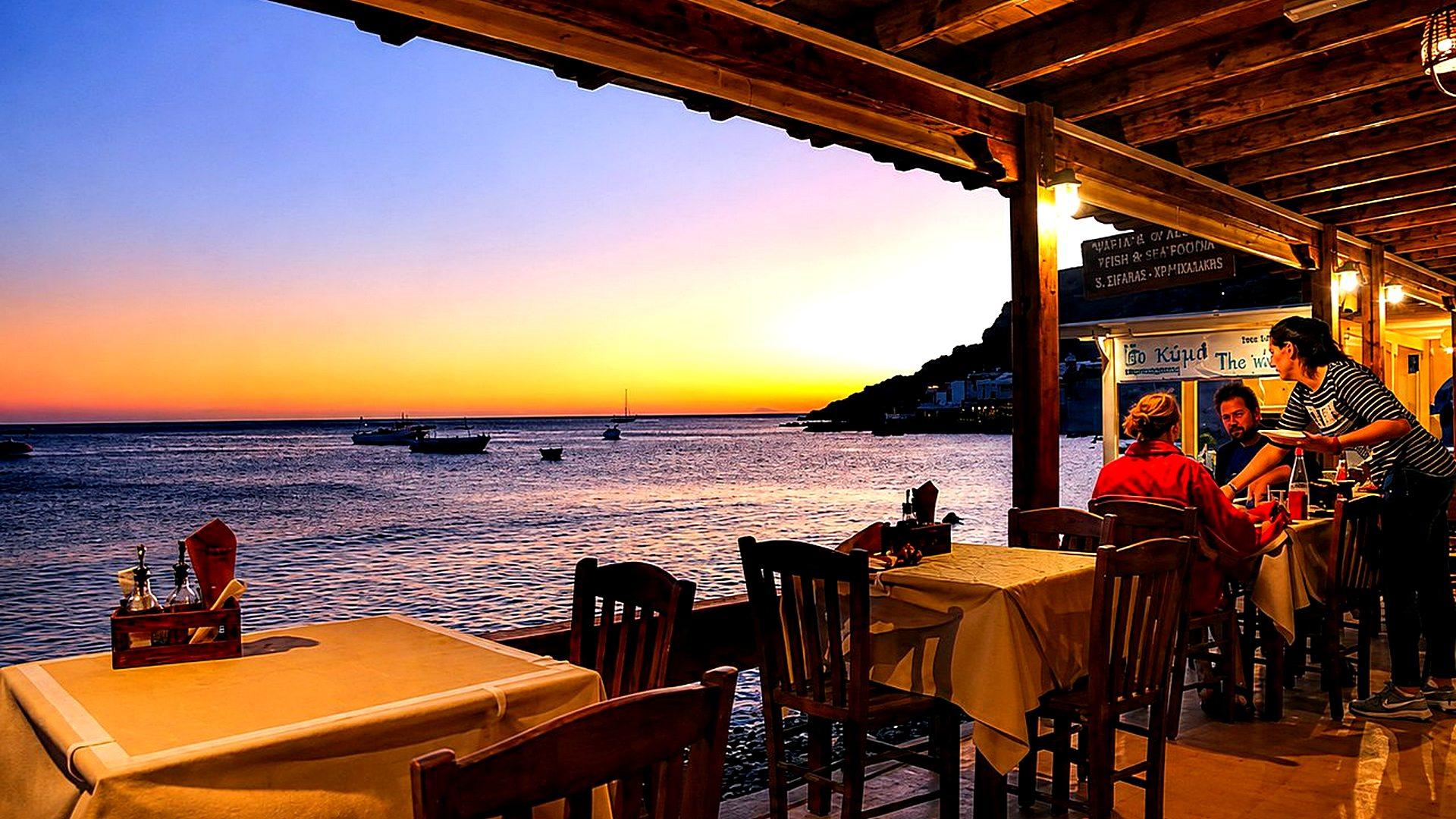
Santorini, Greece
Flavors of Santorini Food and Wine Private Sunset Tour
Taste Santorini through its food, wine and local spirits, with authentic flavors and traditions at the heart of the experience.
Free cancellation up to 24 hours before
4h
From €220 / person
View ActivityWhat to eat in Santorini: fava, tomatoes and local dishes
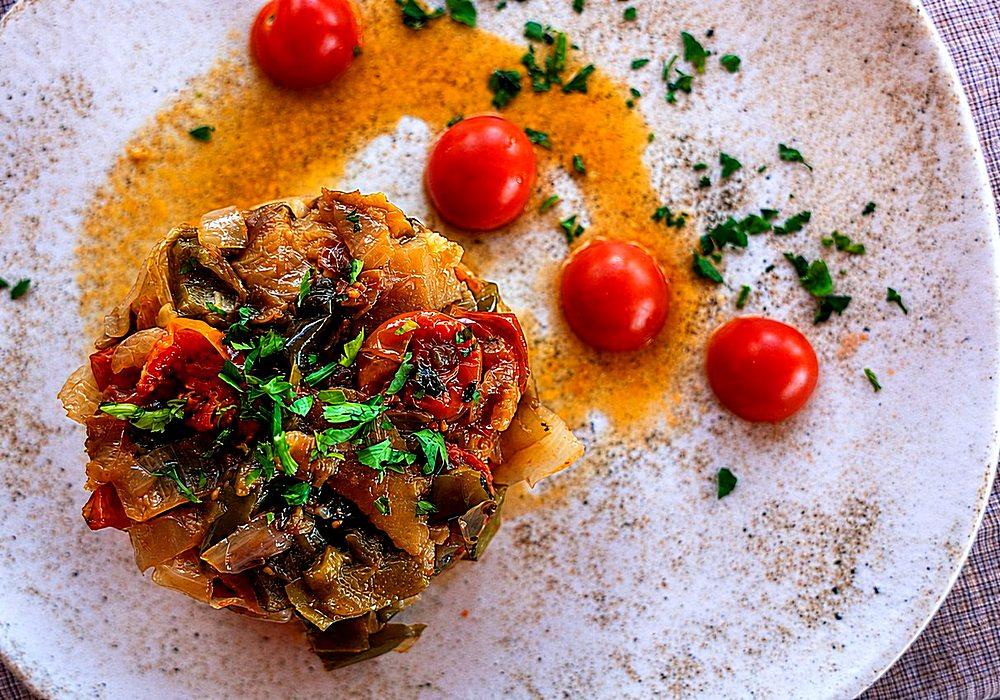
Santorini fava (PDO)
- Made only from the split seeds of Lathyrus clymenum, a pulse
- Not yellow split peas or broad beans
- Its EU description says it cooks quickly into a slightly sweet purée
- Often served "married" (pantremeni) with fried onions and capers
- Seeds of the plant were found in the Bronze Age excavations at Akrotiri
The Santorini tomato (PDO)
- A local small-fruited tomato of 15 to 27 g
- Ribbed, deep red and firm, with little juice
- Sweet but sharply acidic
- Dry-farmed, without irrigation
- Called "tomataki" (little tomato) in Greek
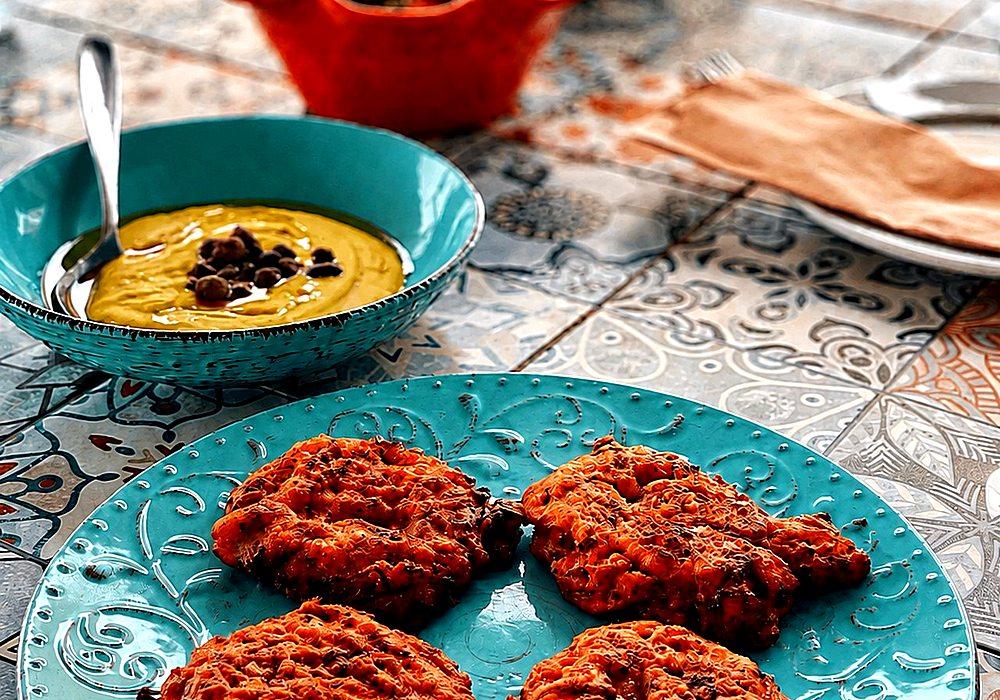
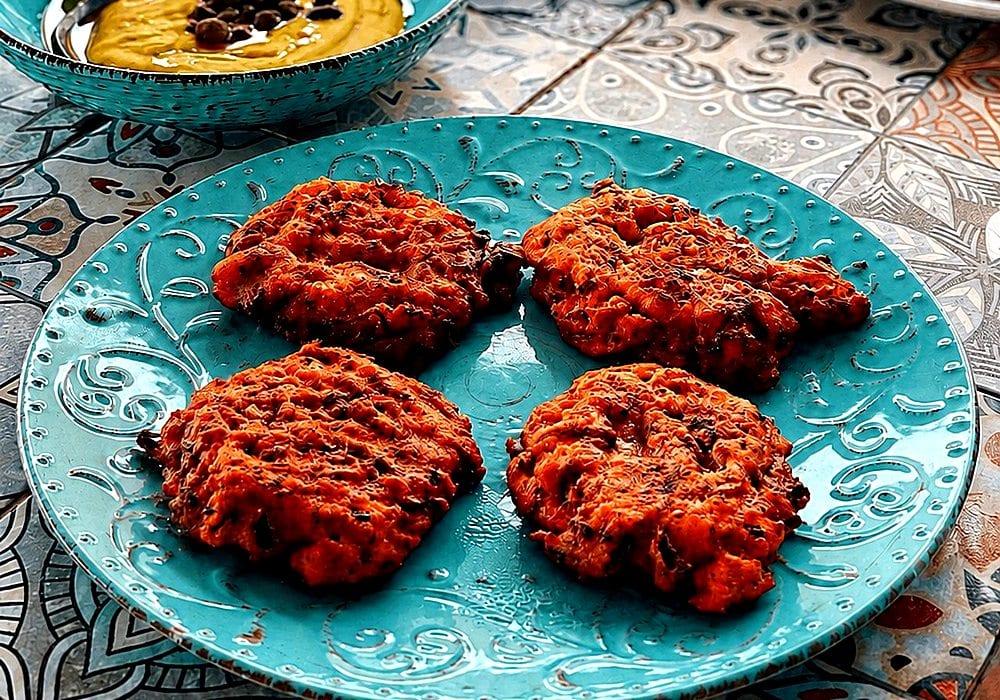
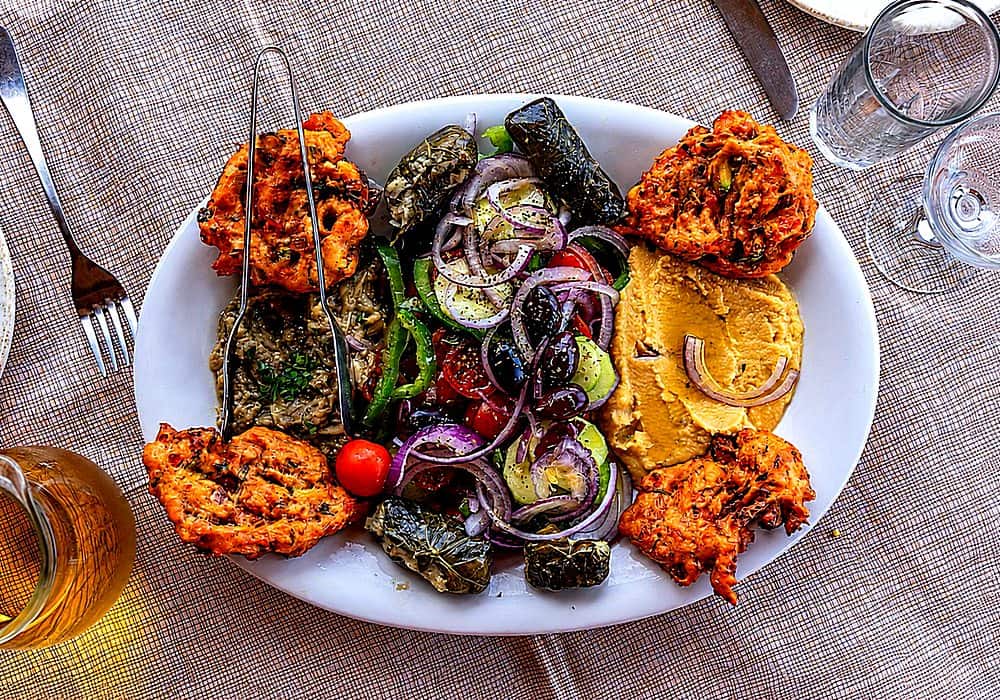
Tomato fritters (tomatokeftedes)
- Chopped tomato with onion and mint, bound with flour and fried
- Recipes vary from kitchen to kitchen
- On the menu of our food tours
White aubergine
- A local aubergine known for its sweet flavour
- Used for aubergine salad (melitzanosalata)
- Also used in place of purple aubergine in moussaka
- Not a protected EU product
Capers and caper leaves
- The buds are salted, sun-dried or pickled in vinegar
- The leaves are pickled too
- Caper leaves go into the Santorini salad
- Capers top fava
Katsouni
- The Santorini name for a local dry-farmed cucumber
- Some cooks add it to the Santorini salad
- On Schinoussa, Iraklia and Amorgos the same word means a pea grown for fava
Chloro
- Santorini's traditional fresh goat's cheese
- Made at household scale, usually from unpasteurised goat's milk
- Eaten fresh or kept in brine
- Not feta
Santorini salad
- Barley rusks, chloro, tomatoes, capers and caper leaves
- Some versions add katsouni
- Recipes vary between kitchens
- On the menu of our food tours
Which Santorini foods are protected?
| Food | EU status |
|---|---|
| Food: Santorini fava (Fava Santorinis) | EU status: Protected Designation of Origin, registered in 2010 |
| Food: Santorini tomato (Tomataki Santorinis) | EU status: Protected Designation of Origin, registered in 2013 |
| Food: White aubergine | EU status: Not registered |
| Food: Capers | EU status: Not registered |
| Food: Katsouni | EU status: Not registered |
| Food: Chloro | EU status: Not registered |
Both protected products must come from Santorini, Thirasia and the small islets nearby.
Santorini menu words
| Word | What it means |
|---|---|
| Word: Pantremeni fava | What it means: Fava "married" with fried onions and capers |
| Word: Favokeftedes | What it means: Fava fritters |
| Word: Brantada | What it means: A salt-cod dish with garlic sauce |
| Word: Pelte | What it means: Tomato paste |
Each tour has its own menu, so check the tour page for what it includes.
Eating Santorini food on your own
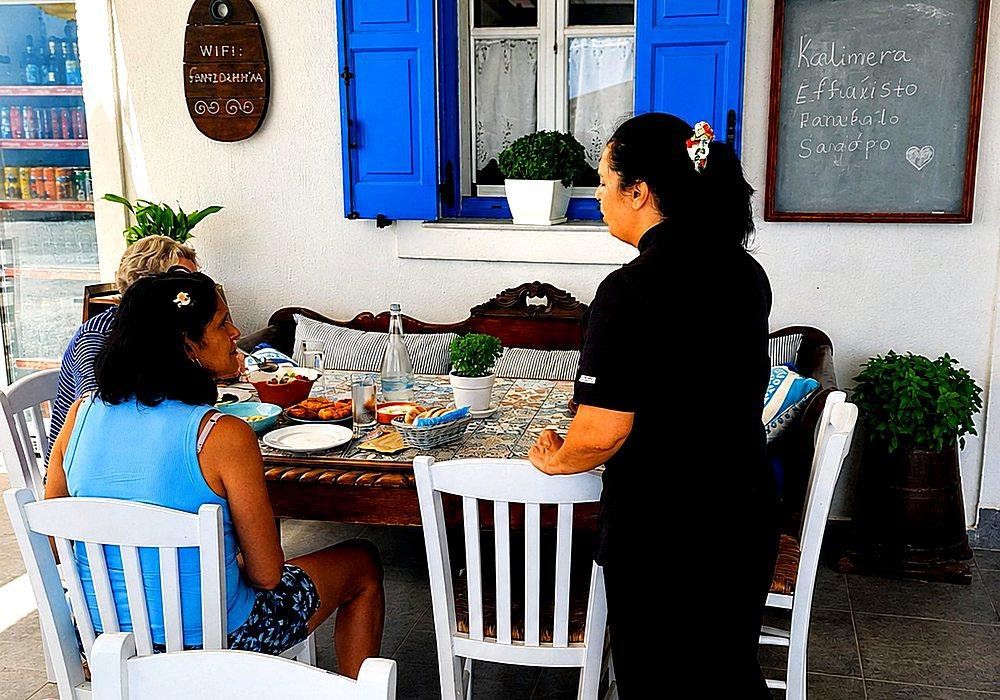
What to order
- Fava, often topped with capers or fried onions
- Tomato fritters, made differently in every kitchen
- White aubergine salad or dip
- A Santorini salad with chloro and caper leaves
- Grilled octopus
- The fish of the day at a harbour taverna
Fish tavernas by the sea
- Ammoudi, below Oia, has fish tavernas at the water's edge
- A long flight of steps leads down to Ammoudi from Oia
- Road access to Ammoudi is restricted
- Vlychada, on the south coast, is a fishing harbour with fish tavernas
- Ask what fish came in that day
Village tavernas
- Family tavernas in Pyrgos, Megalochori and Exo Gonia sit away from the caldera edge
- Tavernas out of town are easiest to reach by car
- Some take bookings by phone only
Booking and timing
- Caldera-view tables fill weeks ahead in July and August
- Local tavernas often fill late in the evening
- Confirm a booking the day before
Walking food tour
- A walking food tour runs from Firostefani to Fira
- It runs from April to October
- It lasts about four and a half hours
- The minimum age is 12
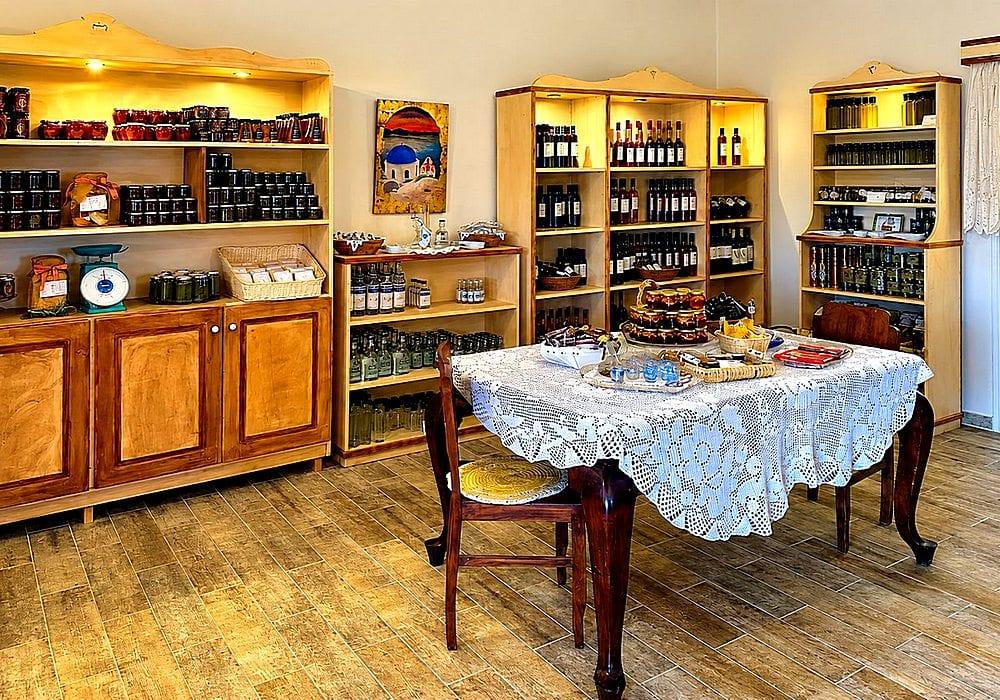
Food to take home
- Santorini fava is a dried product
- Protected fava and tomatoes must come from Santorini, Thirasia or the small islets nearby
- One factory at Monolithos still makes tomato paste from the Santorini tomato
How Santorini food is grown: dry farming on volcanic soil
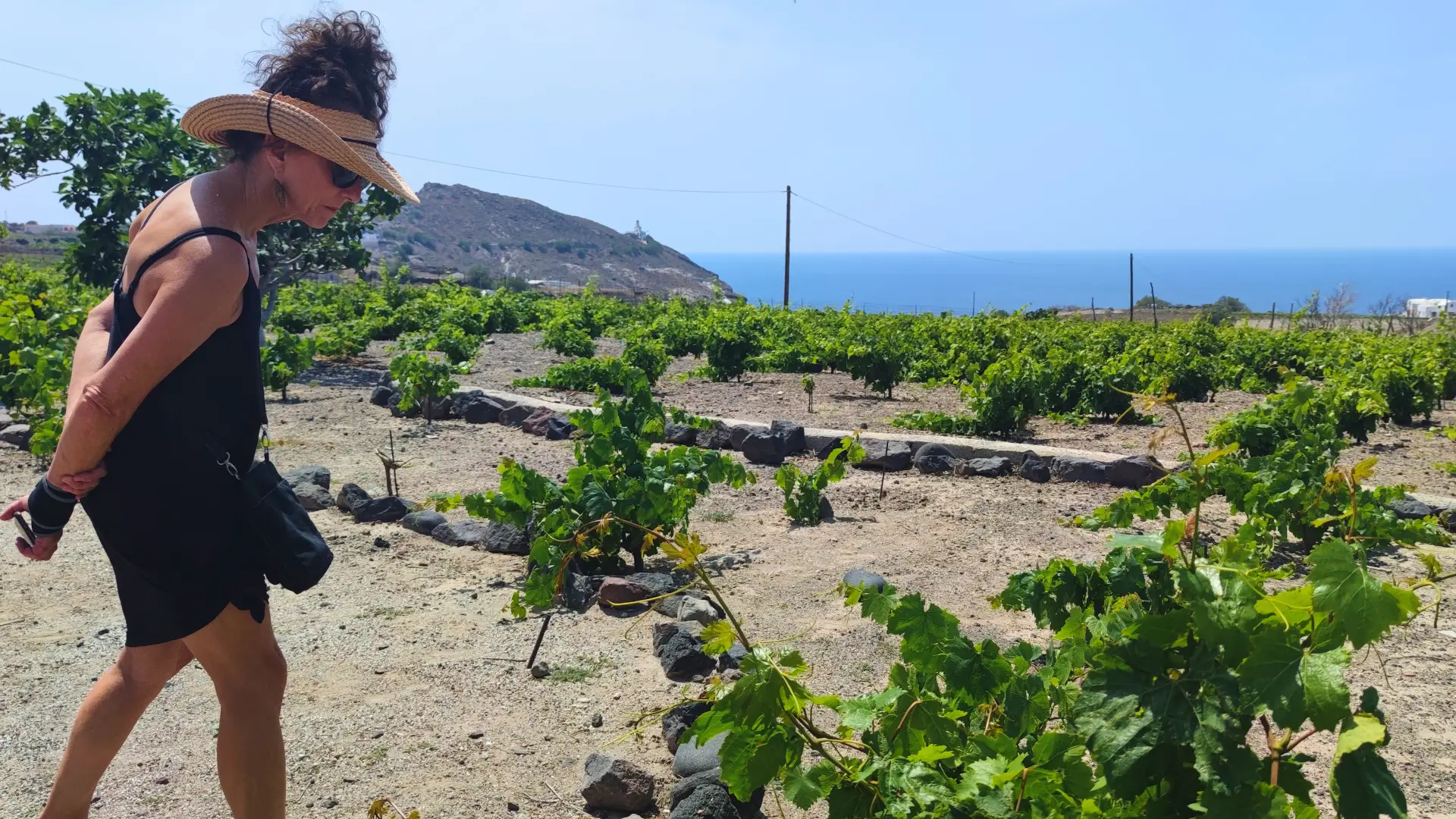
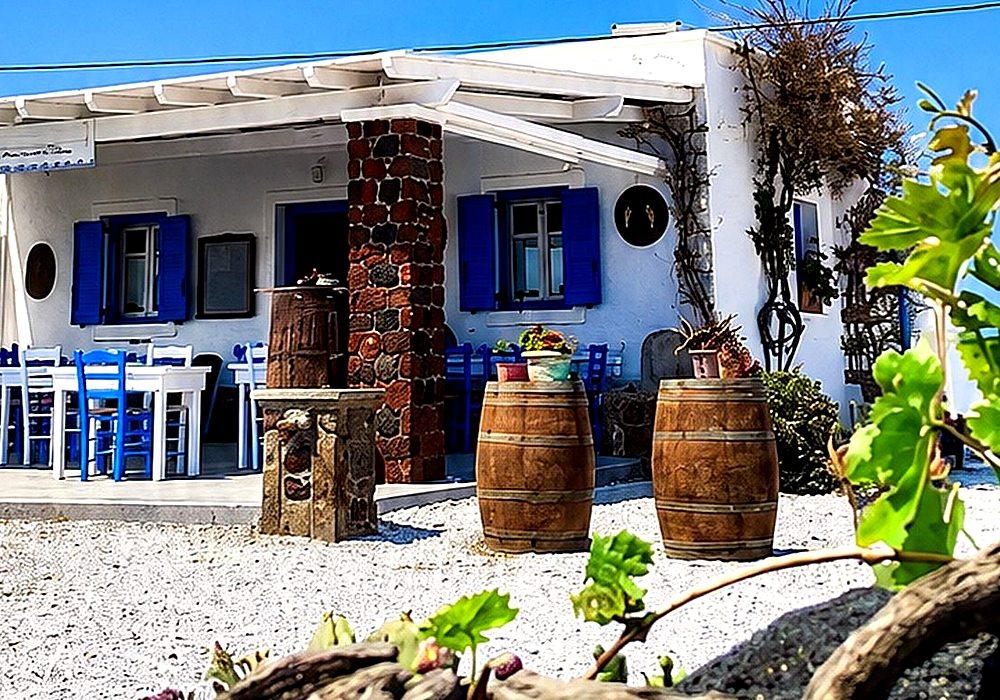
The tomato
- Dry-farmed, without irrigation
- Sown directly into the soil
- Keeps its deep taproot
- Draws on moisture the pumice-rich soil collects from the air at night
- Yields about 500 kg per 1,000 m²
- Open-field tomato on the mainland yields about 10 tonnes on the same area
Fava
- Traditionally unirrigated
- Today watered two or three times in a dry spring
- Traditionally aged for about a year in cool stores
- The stored seed was covered with a layer of Thira soil against insects
- Since 2018 it may also be dried in chambers in as little as three months
- Islanders favoured it because it cooks faster than beans or chickpeas on an island short of firewood
Rain and wind
- About 370 mm of rain a year
- Almost no rain from May to September
- Northerly winds most of the year
- Winds of force 6 or more on about 165 days a year
History
- Tomatoes have been grown on Santorini since the late 19th century
- Growing spread from 1919 to 1922, after the island lost its wine trade with Russia
- In the 1950s nine factories made tomato paste on the island
- Tomato growing shrank sharply as tourism grew
The Tomato Industrial Museum in Vlychada
| At a glance | Details |
|---|---|
| At a glance: Where | Details: Vlychada, on the south side of Santorini |
| At a glance: Season in 2026 | Details: April to November |
| At a glance: Days and hours in 2026 | Details: Tuesday to Sunday, 10:00 to 18:00, closed on Mondays |
| At a glance: Access | Details: All spaces accessible to wheelchair users and families with pushchairs, the museum states |
| At a glance: The building | Details: A tomato factory built in 1945 and a museum since 2014 |
| At a glance: Getting there | Details: By private or rented vehicle, or by local public transport |
What you can do there
- A 90-minute "Cooking with tomato" class, in Greek or English
- Groups of up to 6
- The class recipes include chicken
- The class ends with a bottle of wine
The factory stopped work after its last summer production in 1981. The museum is not a stop on the food tours we sell. Opening dates change each season, so check dates before you go.
Cooking classes in Santorini
At a vineyard venue or a farm
- Some classes are held in a vineyard and garden setting
- Others cook at a farm after a winery visit
- You eat what you cook, with wine
- Dishes often include fava, tomato fritters and a Santorini salad
- Some include hotel pickup
- Groups are small or private
At the tomato museum
- The Tomato Industrial Museum runs its own 90-minute class
- Sessions are by reservation
Wine and younger guests
- Most classes serve wine with the meal
- Greek law bans serving alcohol to anyone under 18
- Some classes accept children
- Ask what younger guests are served
Where our food tours go in Santorini
1Fira cable-car upper station2Profitis Ilias3Pyrgos4Megalochori5Akrotiri lighthouse6Messaria7Tomato museum
© OpenStreetMap contributors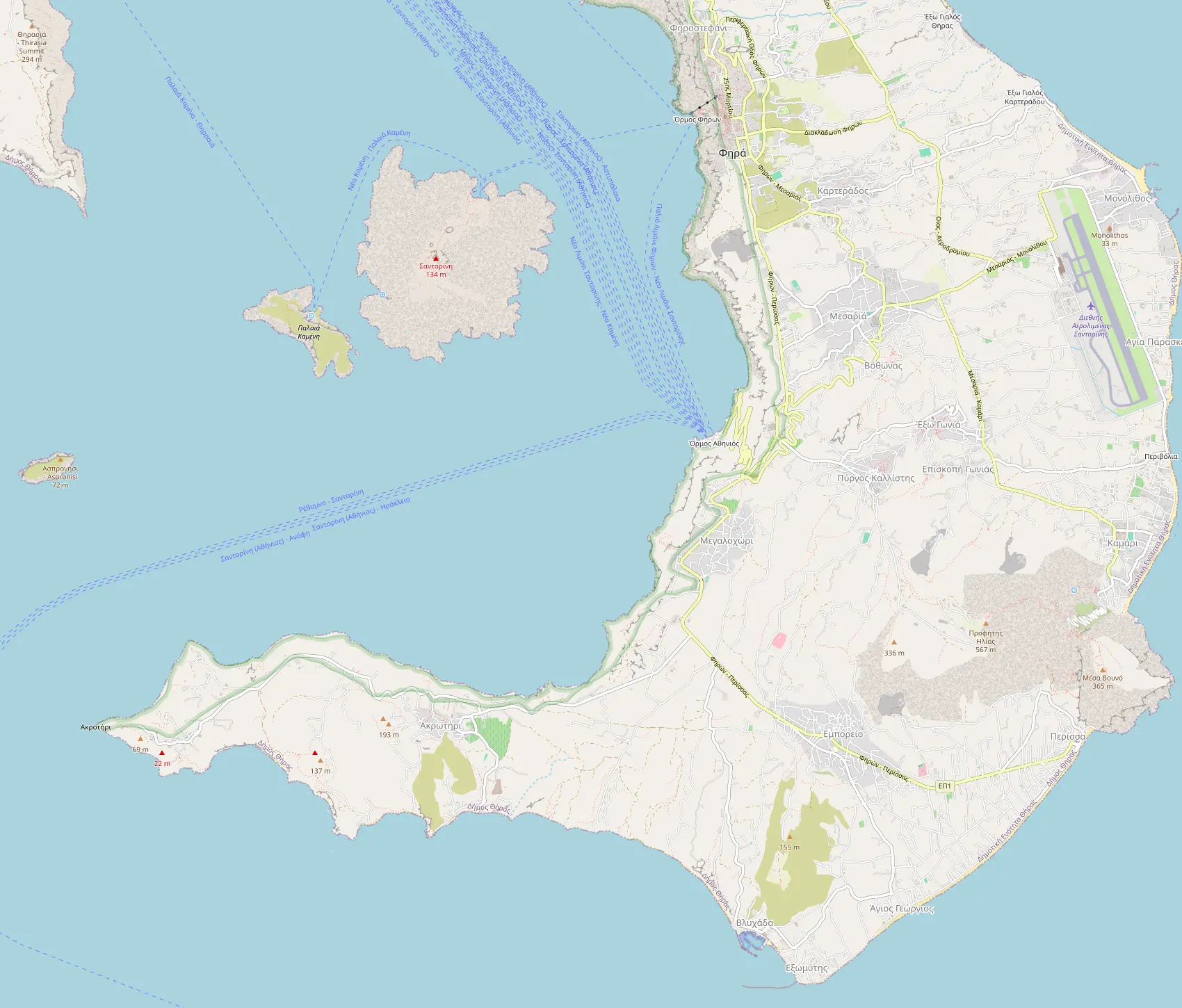
Map of Santorini with the places our food tours name
Fira cable-car upper station
Where some of our tours meet cruise passengers
Profitis Ilias monastery
On the island's highest point, and a stop on some of our tours
Pyrgos
A historic tomato-growing village that our village route passes
Megalochori
A village stop on our village route
Akrotiri lighthouse
On the south-west tip, and a stop on our village route
Messaria
A distillery museum here is a stop on one of our farm lunches
Tomato Industrial Museum, Vlychada
A former tomato factory, open from April to November in 2026
Vegan, vegetarian, allergies and children
Vegan
- Our vegan tour serves a vegan lunch
- It also offers vegan-friendly monastic products
- Its wine tasting is not described as vegan
Vegetarian
- The sunset tour offers vegetarian moussaka as a main
- Other tours serve fish, cured meat or cheese
- One tour says the guide tailors the food to your tastes
- Tell the operator before you book
Allergies
- Restaurants and food shops in Greece must say which of the 14 EU allergens their unpackaged food contains
- The information must be available in Greek
- That duty sits with each food business, not with the tour
- Tell your tour operator about allergies before you book
- Ask at each stop
Children and alcohol
- Greek law bans selling, offering or supplying alcohol in any way to minors
- Minors are under 18, counted by year of birth
- The ban covers any alcoholic drink, whatever its strength
- Some of our tours are for adults only (18+)
- Others include alcohol and accept younger guests
- Ask what younger guests are served instead
Babies and pushchairs
- Some of our tours say infants may not sit on laps
- Some offer infant seats on request
- Some say infant seats are not available
Wheelchairs and walking
- Some of our tours state they are not wheelchair accessible
- Some state they are not pushchair accessible
- Some tour pages do not say
- The tomato museum states all its spaces are accessible
When to go: tomato and fava seasons
| When | What happens |
|---|---|
| When: Late December | What happens: Fava is sown, traditionally on 21 December |
| When: 15 February to March | What happens: Tomatoes are sown directly in the field |
| When: April | What happens: Fava is in flower, and the tomato museum opens for its 2026 season |
| When: Early May | What happens: The first tomatoes appear |
| When: Late May to early June | What happens: Fava is harvested, then dried before sale |
| When: Late June to about 20 July | What happens: The main tomato harvest, per the museum |
| When: November | What happens: The tomato museum's 2026 season ends, so check dates |
Fresh or preserved
- Fresh Santorini tomatoes are a summer crop
- At other times expect tomato paste, sun-dried tomato or preserves
- Fava is a dried product
Summer heat
- In heatwaves the Greek Ministry of Health advises avoiding direct sun and strenuous activity between 11:00 and 17:00
- It also advises plenty of fluids and a hat
- It advises avoiding alcohol during a heatwave
- It lists older people, babies, young children and pregnant women among those most at risk
Driving yourself
- Our food tours include transport
- Greek law sets a general limit of 0.5 g/l of blood alcohol
- Plan transport or a non-drinking driver
Santorini food tours FAQ
What food is Santorini known for?
Santorini is known for two EU-protected products, fava made from the split seeds of Lathyrus clymenum and a small, dry-farmed local tomato. Other local foods include capers and caper leaves, a sweet white aubergine, a local cucumber called katsouni and chloro, a fresh goat's cheese. The best-known dish is tomatokeftedes, fried tomato fritters with onion and mint.
What is Santorini fava, and is it the same as split peas?
Santorini fava is an EU protected product (PDO) made only from the split seeds of Lathyrus clymenum, a pulse grown on Santorini and its islets. It is not yellow split peas or broad beans, although some English-language pages call it split peas. It cooks quickly into a slightly sweet purée and is often served with fried onions and capers. Seeds of the same plant were found in the Bronze Age excavations at Akrotiri.
When are Santorini tomatoes in season?
The Tomato Industrial Museum gives the main harvest as late June to about 20 July. The first fruits appear in early May. The plants are dry-farmed, without irrigation. At other times of year you are more likely to meet tomato paste, sun-dried tomato or preserves.
Is a Santorini food tour a full meal or just tastings?
Our food tours include a meal with fava, tomato fritters and a Santorini salad. The meal is at a family farm, at a seaside tavern or on a village route, and our sunset tour serves dinner. Each tour page lists its own menu and tastings.
How long does a Santorini food tour take, and is pickup included?
Our food tours last 3 to 5 hours. They are private drives with pickup included. For cruise passengers, some of our tours meet at the upper station of the Fira cable car, and the cable-car ticket may not be included. Each tour page gives its length and pickup details.
Is there a vegan or vegetarian food tour in Santorini?
Our vegan tour serves a vegan lunch with vegan-friendly monastic products, although its wine tasting is not described as vegan. Our sunset tour offers vegetarian moussaka as a main course. Other tours serve fish, cured meat or cheese, so tell the operator about your diet before you book.
Can children join a Santorini food tour with wine or spirits?
Greek law bans selling, offering or supplying alcohol in any way to minors, meaning anyone under 18, counted by year of birth. Some of our Santorini food tours are for adults only (18+). Others include alcohol and accept younger guests, so ask the operator what younger guests are served. Our olive-oil tour lists no alcohol and sells child tickets.
Can I combine food and wine in Santorini?
Some of our Santorini food tours include wine, either at a winery tasting or with the meal. If wine matters most to you, see our Santorini wine tasting tours. Under-18s cannot be served alcohol in Greece.
Is a cooking class better than a food tour in Santorini?
On a food tour you taste dishes others have prepared, while in a cooking class you prepare a meal and then eat it. The Tomato Industrial Museum runs a 90-minute "Cooking with tomato" class in Greek or English for up to 6 people, by reservation. Its recipes include chicken and it ends with a bottle of wine.
Is the Santorini tomato museum worth visiting?
The Tomato Industrial Museum in Vlychada is a former tomato factory, built in 1945, that became a museum in 2014. In 2026 it opened from April to November, Tuesday to Sunday, 10:00 to 18:00, and it states all its spaces are accessible. Check dates before you go.
Where can I eat local Santorini food without a tour?
Order fava, tomato fritters, white aubergine and a Santorini salad at a taverna. Ammoudi below Oia and the fishing harbour at Vlychada have fish tavernas by the water. Family tavernas in Pyrgos, Megalochori and Exo Gonia sit away from the caldera edge, and out-of-town tavernas are easiest to reach by car.
Are there cooking classes in Santorini?
Yes. Some classes are held in a vineyard setting or at a farm, where you cook dishes such as fava and tomato fritters and then eat them with wine. The Tomato Industrial Museum runs a 90-minute class for up to 6 people, by reservation. Under-18s cannot be served alcohol, so ask what younger guests are served.
Is there a walking food tour in Fira?
Yes. A walking food tour runs from Firostefani to Fira from April to October. It lasts about four and a half hours and stops at least seven times. Groups are small, and the minimum age is 12.
Sources
Sources read on 16 November 2026.
Seasons, opening hours and tour menus change. If you see something out of date, tell us and we will correct it.
- EU register (eAmbrosia): Fava Santorinis, protected designation of origin
- EU register (eAmbrosia): Tomataki Santorinis, protected designation of origin
- EU single document: Fava Santorinis (Official Journal C 215, 2019)
- EU single document: Tomataki Santorinis (Official Journal C 167, 2013)
- EU register: amendment to Fava Santorinis on ageing (2018)
- Ministry of Rural Development: Fava Santorinis product specification (2018)
- Ministry of Rural Development: Tomataki Santorinis product specification (2012)
- Tomato Industrial Museum "D. Nomikos": visits and the 2026 season
- Tomato Industrial Museum "D. Nomikos": cooking with tomato
- Visit Greece: flavours from Santorini
- Municipal Port Fund of Thira: gastronomy
- travel.gr: the local dishes of Santorini (2021)
- travel.gr: the local flavours of Santorini (2023)
- travel.gr: Santorini tomato fritters (2021)
- Athens Voice: the traditional cuisine of Santorini (2016)
- Greek Gastronomy Guide: Santorini capers
- To Vima: the Cyclades' waterless gardens (2026)
- Law 5216/2025 on alcohol and minors
- Law 5209/2025, Article 46: drink-driving limits
- Joint Ministerial Decision 1412/31883/2019 on allergen information
- Ministry of Health: heatwave prevention guide (July 2026)
- Discover Cyclades: where to eat in Santorini (updated 29 May 2026)
- The Mediterranean Traveller: Santorini food guide
- travel.gr: Santorini tavernas
- Tomato Industrial Museum: the tomato factories (Greek)
- OpenStreetMap: map data