
Best months
April to October
· October is the last month
Headline trip
Spinalonga & Kolokytha
Departs
Two coasts, four ports
Suits
Families to couples
Typical
About five hours
From
€140 pp
FIND YOUR TRIP
Which boat trip is right for you?
The trips sold here are not variations on one day out. One sails north to a fortress island, another crosses Crete to a different sea, and only some of them put you ashore. Tell us what you are after.
The classic choice
Round the fortress, then swim at Kolokytha
You want the classic Mirabello day: the walls of Spinalonga from the water, then a long anchor in a shallow turquoise cove to swim, snorkel and eat on board.
You will see: Spinalonga from the sea, Kolokytha bay, snorkelling
See trips →
The afternoon and the light
You would rather sail once the fortress crowds have thinned, swim in the warmest water of the day and come back with the low sun on the walls.
You will see: Later departures, softer light, warm evening water
See trips →
Cross to the other sea
You want the sandbank island and the clear shallow water of the Libyan Sea, and you do not mind a short drive over the isthmus to reach the boat.
You will see: Chrissi island, pale shell sand, very clear water
See trips →
An easy day with children
You want shade, room to move, food on board and a long safe swim stop, on a boat that is built for a family day rather than a walk around an archaeological site.
You will see: Shaded decks, snorkel gear, a long anchored swim stop
See trips →
BOOK A TRIP
The 4 boat trips in Agios Nikolaos
Real boats with local operators, from Agios Nikolaos harbour and from Ierapetra on the south coast.
Trips are ordered by our recommendation. Ranking is never paid placement.
Agios Nikolaos, Greece
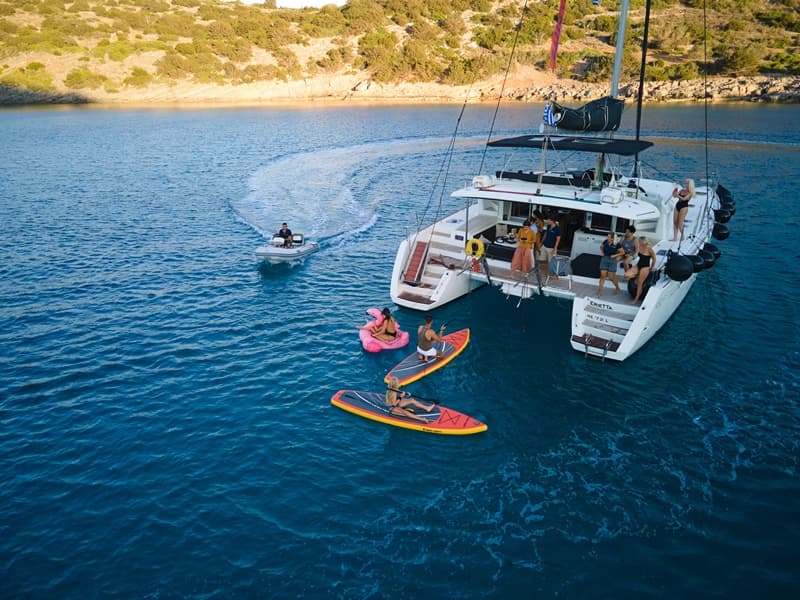
Afternoon Luxury Catamaran Cruise from Agios Nikolaos to Spinalonga (5 Hours)
Board a Nautitech 46F catamaran at Agios Nikolaos and spend five hours cruising Mirabello Bay. Sail past Barbarossa Cave and Spinalonga Island, use the water sports gear at Kolokitha Bay, and eat a nutritionist-designed Cretan meal with open-bar drinks on the return leg.
Free cancellation up to 24h before
5h
From €140 / person
View Activity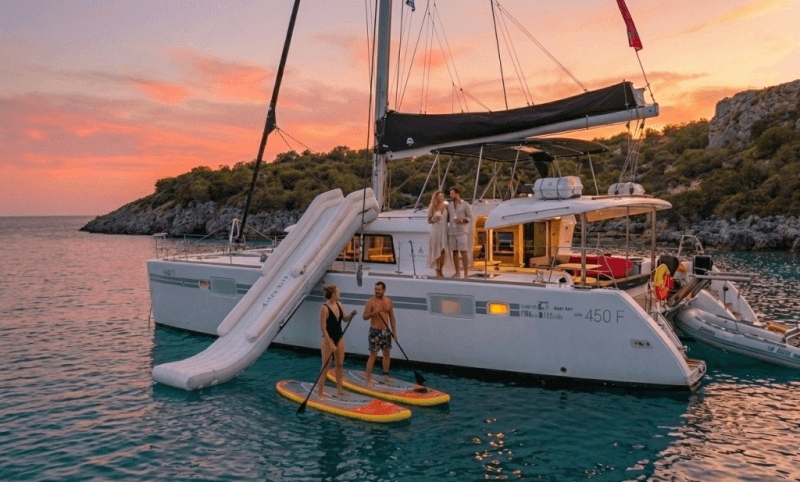
Agios Nikolaos, Greece
Chrissi Island Afternoon Catamaran Cruise from Ierapetra – 5 Hours
Depart Ierapetra Marina on a luxury catamaran for a 5-hour afternoon cruise to Chrissi Island, a protected Natura 2000 reserve. Swim, snorkel, and paddleboard in clear water, then sit down to an organic Cretan lunch with an open bar.
Free cancellation up to 24h before
5h
From €140 / person
View Activity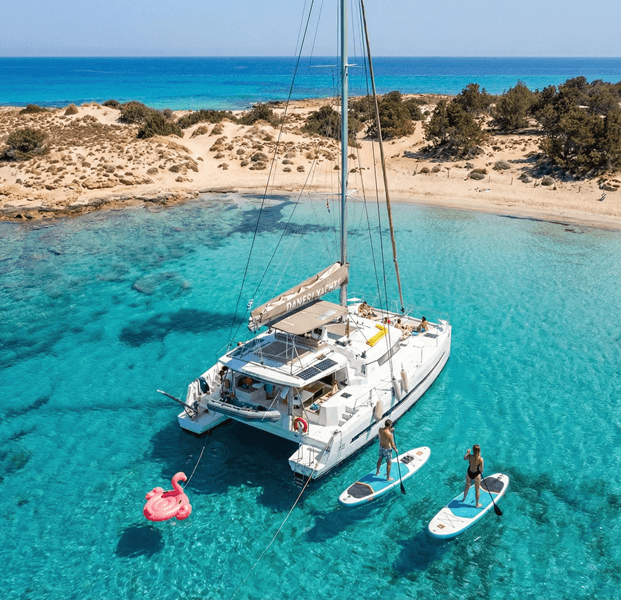
Agios Nikolaos, Greece
Chrissi Island Morning Catamaran Cruise from Ierapetra – 5 Hours
Board a luxury catamaran at Ierapetra Marina and sail 5 hours to Chrissi Island in the Libyan Sea. Swim, snorkel, and paddleboard in clear water, then sit down to a nutritionist-designed organic lunch with unlimited local wine and beer.
4.9from 70+ reviews
Free cancellation up to 24h before
5h
From €140 / person
View Activity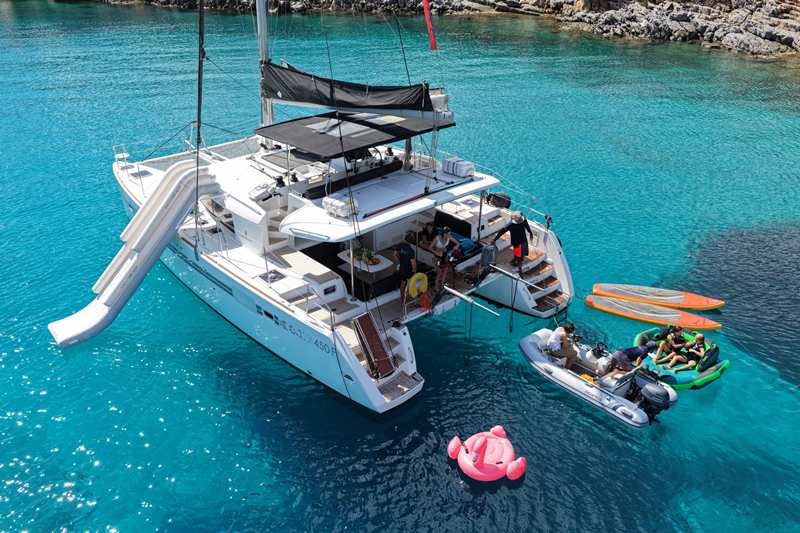
Agios Nikolaos, Greece
Morning Luxury Catamaran Cruise from Agios Nikolaos to Spinalonga (5 Hours)
Board a Nautitech 46F catamaran at Agios Nikolaos Port and sail to Spinalonga Island and Kolokitha Bay. The 5-hour cruise includes water toys, snorkeling gear, a nutritionist-designed Cretan lunch, and an unlimited open bar for up to 20 guests.
Free cancellation up to 24h before
5h
From €140 / person
View ActivityWHEN TO GO
Agios Nikolaos boat tours month by month
The season is set by two things: the weather, and Spinalonga itself, which opens to visitors for the summer and closes again for the winter. Here is how both move, and what it means for the month you are looking at.
J
F
M
A
M
J
J
A
S
O
N
D
Sea calm (Mirabello)
Spinalonga open
Boat trips running
Sea warm enough
Fewer crowds
Quiet / off Building Prime Windy (meltemi) / busy
Right now, in October
A quietly excellent month, and the last one. The water stays warm, and warmer on the south coast than the north, but the archaeological site closes at the end of the month and schedules thin out before that.
WHERE YOU GO
What the boats go to see
Not every trip reaches every one of these, and one of them is on the other side of the island. Each card notes which trip gets you there.
The island
Spinalonga
A small fortified islet at the mouth of the Elounda lagoon: Venetian bastions begun in 1579, then an Ottoman merchant town of more than a thousand people, then Greece’s leper colony from 1904 until 1957. The terraced houses you see on approach are largely the Ottoman town, reused by the colony. It is on Greece’s tentative list for World Heritage, not yet inscribed.
↳ Sailed around on every cruise; landing needs a trip that stops
The swim stop
Kolokytha bay
The standard anchorage: a small pale-sand cove on the seaward side of the Spinalonga peninsula, with shallow turquoise water and a chapel on the slope above. There are no facilities of any kind, which is exactly why it stays quiet — everything you need comes off the boat.
↳ Every Mirabello cruise
On the route
The Barbarossa cave
Somewhere on this coast, depending on whose boat you are on, you pass a cliff-foot sea cave that local legend attaches to the corsair Barbarossa. The story is folklore rather than history, and more than one cave claims it, but the rock, the light inside and the water colour beneath the boat are real enough.
↳ On the route north on some cruises
Wildlife refuge
Agioi Pantes
The steep islet across the mouth of the harbour, a refuge for the kri-kri, the Cretan wild goat, after a handful were moved here from an islet off Chania in the 1950s. Landing is prohibited and the animals are shy, so treat a sighting as luck rather than an itinerary item.
↳ Passed minutes after leaving the harbour
Around the bay
Elounda, Plaka and a sunken city
The lagoon shore holds more history than the boats have time for: the Greco-Roman city of Olous lying in the shallows by the causeway, a canal cut by French troops in 1897, three stone windmills beside it, and Venetian salt pans that were still being worked until 1972.
↳ Seen from the water and from the road
The other sea
Chrissi island
A low, uninhabited island in the Libyan Sea, protected as a Natura 2000 site. Its pale pink-white sand is crushed shell rather than stone, and its woodland is juniper, not the cedar the guidebooks keep calling it — one of the largest natural stands of its kind in Europe, and the reason the interior is off limits.
↳ From Ierapetra only, on the south coast
In the water
Clear water and snorkelling
Rock reef and seagrass meadow rather than coral: damselfish, wrasse, sea bream and octopus around the edges of a cove, with the meadows acting as a nursery, so late spring and early summer are thick with small fish. Masks and fins are usually carried on the catamarans.
↳ All swim stops
The view
Mirabello Bay and the mountains
The biggest bay in Crete, with the Dikti massif standing behind the town — high enough to hold snow into spring — and the Thripti hills across the water. This coast dropped in late antiquity while western Crete rose, which is why a Greek city now lies under the shallows at Elounda.
↳ Every departure
DEPARTURE PORTS
“From Agios Nikolaos” can mean the other coast of Crete
This is the thing to get right before you book. Boats for Spinalonga leave from three different places on Mirabello Bay, each with a different crossing time, and the Chrissi trips leave from a town on the south coast, reached by road. Always check the real meeting point, the real start time, and whether any transfer is included.
1
Agios Nikolaos town harbour
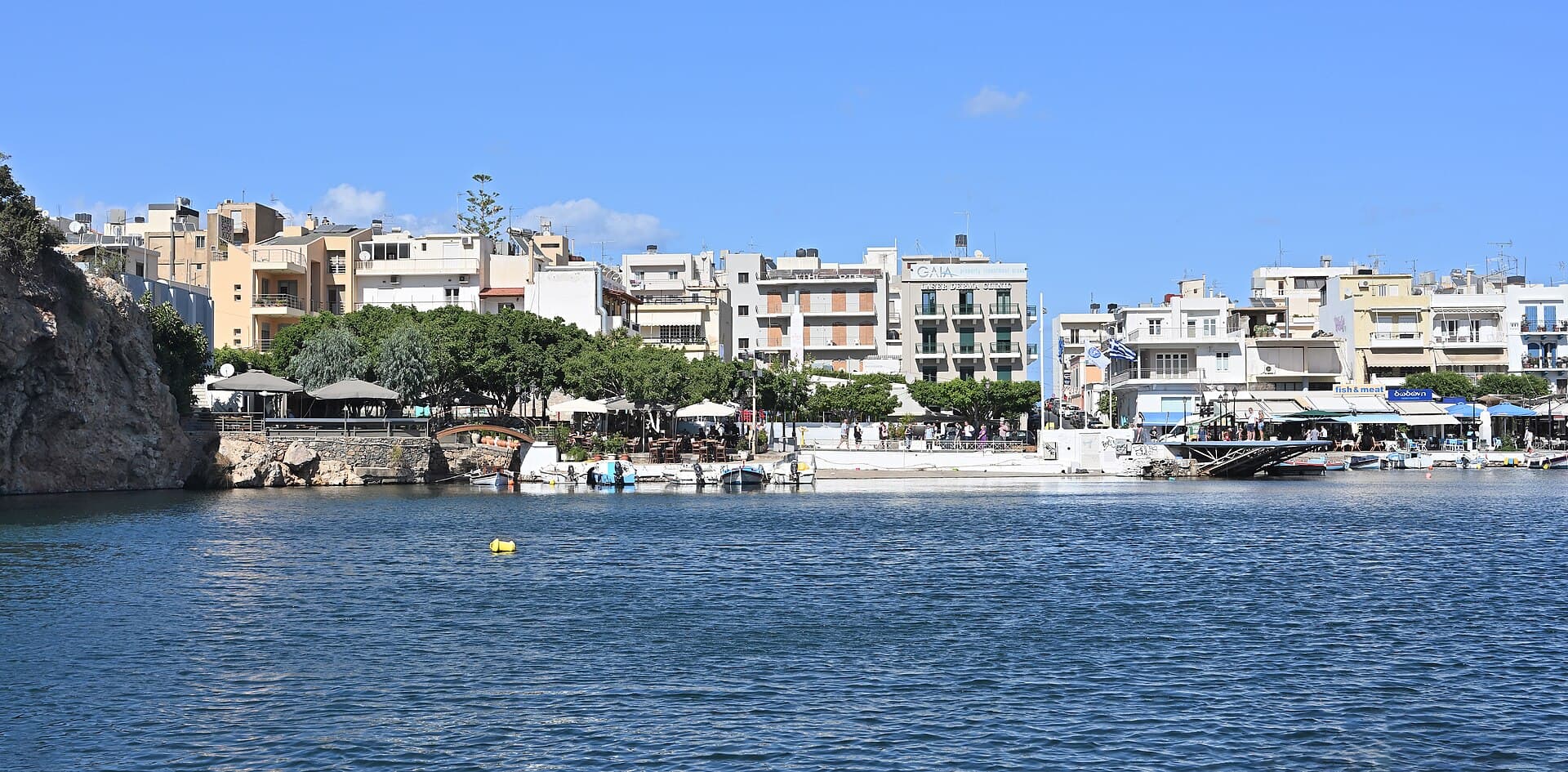
The quay on the sea side of the canal, a few minutes’ walk from the centre. Note that the boats do not leave from Lake Voulismeni itself, however much it looks like they should — the lake is joined to the harbour by a short canal and the excursion boats load beyond it. This is the one departure point that works without a car, and it is where the catamarans and the half-day cruises sail from.
Trips: Catamaran cruises, half-day cruises with a barbecue, sunset sailings, the semi-submarine, private charters
2
Elounda
About twelve kilometres north of town, roughly a quarter of an hour by road. The busiest boarding point for Spinalonga itself, with small boats leaving through the day and the shortest wait if you simply turn up. Harbour parking fills in high summer.
Trips: Boats that land on Spinalonga, half-day trips with a swim and a meal, fishing trips
3
Plaka
A small village directly opposite the fortress, about fifteen kilometres from town. The crossing takes about ten minutes, which makes it the gentlest option for young children, for anyone prone to seasickness, and for anyone who wants the maximum time ashore for the minimum time afloat. Best reached by car.
Trips: The short hop to Spinalonga, boats back and forth through the day
4
Ierapetra — the south coast
Roughly thirty-five kilometres south, well under an hour by road across the isthmus, beside the old Venetian fortress at the harbour. This is the only place the Chrissi boats leave from. A Chrissi trip advertised from Agios Nikolaos means this drive, so check whether the transfer is included and whether the time you were given is the pickup or the sailing.
Trips: Catamaran and day-boat cruises to Chrissi island, private charters
This loads Google Maps, switches on functional cookies and lets Google set its own cookies. You can change this in the cookie settings at any time.
Crete is only about twelve kilometres wide at the Isthmus of Ierapetra, so the drive from Mirabello Bay to the Libyan Sea is short. It is still a different sea, with its own weather on the day.
PLAN YOUR DAY
The full guide
Everything worth knowing before you book, in a few seconds of skimming.
Types of trip
Catamaran cruise around Spinalonga
The all-rounderThe comfortable all-rounder and the trip most people mean by a boat day here. Roughly five hours: north across the bay, a circuit of the fortress island from the water, then a long anchor at Kolokytha to swim, snorkel and eat on board. Shade, a proper deck and room to move make it the easiest option in the heat. It is a sailing day rather than a site visit — these cruises generally do not land.
The small boats that land on Spinalonga
History firstPlain open boats running back and forth from Elounda and from Plaka through the day. No commentary, no swim stop and no meal — just the crossing, the island and a boat back when you are ready. The entrance ticket is bought on the island. This is the choice when the history is the point.
Half-day cruise with a barbecue
Families & valueThe classic local day boat from the town harbour: across the bay, time ashore on Spinalonga, then Kolokytha to swim while the crew cooks lunch on deck. Slower and simpler than a catamaran, and usually the better value with children.
Chrissi island from Ierapetra
The other seaA different sea and a different feeling: an open crossing of anything from about three quarters of an hour to an hour and a quarter, depending on the boat, out to an uninhabited sandbank island, then a long stop anchored off the beaches to swim and snorkel. Everything comes off the boat, because there is nothing at all on the island.
Sunset and late-afternoon sailings
CouplesThe same bay with the crowds gone and the light low on the Venetian walls. The wind usually eases towards sunset and the surface water is at its warmest, so an evening sailing misses the windiest part of the afternoon. The flattest water of the day is still the morning.
The semi-submarine
Young childrenA purpose-built boat with an air-conditioned viewing room below the waterline, circling the islet at the harbour mouth with commentary. Often listed as a glass-bottom boat. Short, shaded and easy, which makes it the option that works with small children or in the middle of a hot afternoon.
Private charters and self-drive boats
Your own paceYour own skippered boat, priced per boat rather than per person, or a small rental you drive yourself — Greek rules require no licence up to thirty horsepower, with a briefing before you leave. The flexible choice for a group, a celebration, or a cove you want to have to yourselves.
Full-day cruises east
Something differentLonger days along the eastern shore of the bay towards the Minoan islets of Mochlos and Pseira, roughly seven hours. Very different from a Spinalonga half-day, and not something a five-hour trip can be stretched to cover.
“Crete is barely twelve kilometres wide at the Isthmus of Ierapetra. Drive south for well under an hour and you are on the Libyan Sea, looking at a different island under a different wind — which is why a day that is blown out in Mirabello Bay can still be a sailing day from Ierapetra. The two coasts keep different weather, and the south has squalls of its own, so it is worth asking about both.”
On the day
Mornings are the calm half of the day in high summer. The meltemi, the summer north wind, builds from around midday and eases again towards sunset, so a morning sailing is usually the flatter crossing and a late one the softer light.
There is very little shade on Spinalonga, and none on Chrissi that visitors may use, so a hat, high-factor sunscreen and your own water matter more than the boat’s awning does. Towels are often not provided — check what your booking includes.
Take something on your feet. Rocky shallows have sea urchins, and if your trip lands on Spinalonga the ground is cobbles, bare rock and steps, entered through a low tunnel. It is not a day for flip-flops.
Check the real meeting point and what the stated time means. A Chrissi trip sold from Agios Nikolaos involves a drive across the island to Ierapetra, and hotel pickup may be an extra rather than part of the fare, so confirm both. Arrive at the quay twenty to thirty minutes early either way, because the boats do not wait.
Good to know
- Many cruises from Agios Nikolaos sail around Spinalonga rather than landing on it. If walking inside the fortress is the point of your day, check the itinerary before booking, and expect to take one of the boats from Plaka or Elounda, or a day boat that stops.
- Spinalonga is a state archaeological site with its own entrance ticket, bought on the island and normally separate from the boat fare. It opens for the summer at the start of April and closes at the end of October. Both the price and the way tickets are issued have changed in recent seasons, so check the current position before you travel.
- Chrissi is a protected reserve. Boats anchor off and you go into the water from the boat; the island’s interior and its juniper woodland are off limits, there is no shade, water, toilet or shop, and taking sand or shells away is prohibited. The access rules have changed more than once, so confirm the current arrangement with the operator.
- Agioi Pantes, the islet across the mouth of the harbour, is a wildlife refuge for the Cretan wild goat. Boats pass close and swim nearby, but landing is not permitted.
- The boats here take a passenger list, so expect to give a full name, date of birth and passport or identity-card number for everyone in your party when you book. Have the documents to hand.
- Spinalonga is at its busiest from late morning to mid-afternoon, when the coach and cruise parties arrive, and there is usually an unshaded queue at the ticket kiosk once you land. An early boat, or a late-afternoon one, gives you the fortress at its quietest.
- In rough weather the decision to sail is usually the port authority’s rather than the operator’s, and the two coasts do not always close together — a day that is blown out in Mirabello Bay can be sailing from Ierapetra. Book your boat day early in your stay so there is room to move it.
“Most boats round Spinalonga without stopping. The walls you photograph from the deck were begun by Venice in 1579, held an Ottoman town of more than a thousand people, and then held Greece’s leper colony until 1957 — but you only walk that ground if your trip actually lands, and if you buy the site’s own ticket when you step off the boat.”
A boat day here is really a choice between two seas and two very different islands. We help you pick the one that fits your dates, your sea legs, and what you actually want to see.
See the tripsQUESTIONS
Frequently asked questions
Do boat tours from Agios Nikolaos land on Spinalonga?
Some do and some do not, and this is the single thing to check before booking. The catamaran cruises from the town harbour generally sail around the island and then anchor at Kolokytha to swim, so you see the fortress from the water rather than walking through it. Trips that put you ashore are usually the small boats from Plaka and Elounda, or the traditional day boats that include time on the island. Wherever you land, the archaeological site has its own entrance ticket, bought on the island and normally not included in the boat fare.
Where do the boats actually leave from?
Four places, and they are not interchangeable. Boats for Spinalonga leave from the Agios Nikolaos town quay, from Elounda about twelve kilometres north, and from Plaka, the village directly opposite the island. The Chrissi boats leave from Ierapetra on the south coast, roughly thirty-five kilometres away by road. One local trap is worth knowing: the excursion boats do not leave from Lake Voulismeni in the middle of town, but from the harbour quay just beyond the canal.
How long is the crossing?
From Plaka it is about ten minutes. From Elounda it is around twenty minutes. From Agios Nikolaos itself it is a proper cruise across the bay rather than a transfer, which is why those trips run to about five hours in total, with a good part of that anchored at the swim stop. Ierapetra to Chrissi is an open crossing that varies with the boat, from about three quarters of an hour to an hour and a quarter each way, so check the crossing time for the one you book.
Can you walk on Chrissi island?
Not into the island itself. Chrissi is a protected reserve, its juniper woodland and interior are off limits, and the arrangements for stepping ashore have been tightened and changed several times in recent years. In practice the trips are anchored swimming and snorkelling days: the boat stops off the beaches and you go into the water from it. There is no shade, no fresh water, no toilet and nothing for sale on the island, and taking sand or shells away is prohibited. Confirm the current arrangement with the operator when you book.
When is the best time to go?
The season runs from about April to the end of October, which is also when Spinalonga is open to visitors. June and September are the sweet spot, with warm water, calmer winds and fewer people than midsummer. July and August are the hottest, busiest and windiest. Whatever the month, mornings are generally calmer on the water than afternoons, and Spinalonga is quietest early or late in the day.
What happens if it is too windy?
In summer the wind here is the meltemi, a dry northerly that builds through the afternoon and can blow for days. When it is strong enough, sailing is stopped by the port authority rather than by the operator, and smaller and faster boats are held back before large ones. The usual remedy is a change of date or a refund, but check the specific terms when you book. The practical advice is to put your boat day early in your stay, so a windy day still leaves room to go later in the week.
Is it suitable for families and children?
Yes, with one distinction worth knowing. The Mirabello catamarans are stable, shaded and roomy, with swimming, snorkel gear and food on board, and the semi-submarine from the town harbour is an easy short outing for younger children. The Chrissi trips are a different proposition: an open crossing of about an hour each way, and some operators advise against them for children under two, for pregnant travellers, for anyone with limited mobility and for anyone prone to severe seasickness, so read the individual tour page before booking. Take water shoes for the rocky shallows. If you plan to land on Spinalonga, be aware that the island is steps, cobbles and uneven stone with a low tunnel at the entrance, so it does not suit pushchairs or wheelchairs, and there is almost no shade once you are ashore.
Guide last updated on